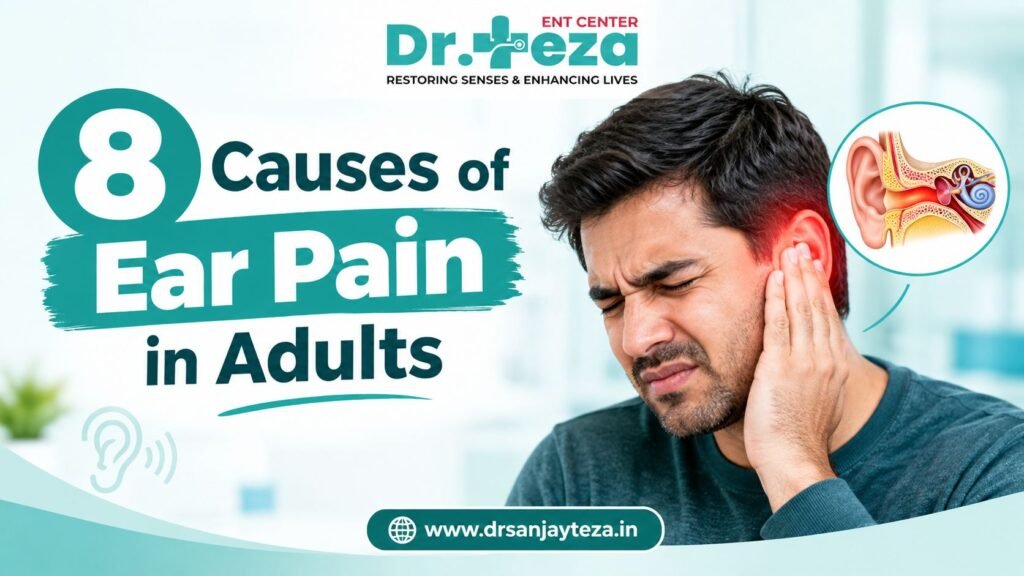
Ear pain in adults can be uncomfortable and worrying, especially when you are not sure what is causing it. While an ear infection is a common reason, ear pain can also happen due to earwax buildup, pressure changes, jaw problems, dental issues, or infections in nearby areas such as the throat. Understanding the actual cause is the first step toward getting the right care.
In this blog, we will explore the 8 common causes of ear pain in adults, the symptoms that may occur with each cause, and simple ways to understand what your ear pain may indicate. You will also learn when ear pain needs an ENT evaluation and why persistent or unusual symptoms should not be ignored.
What Is Ear Pain in Adults?
Ear pain in adults, also called otalgia, is discomfort or pain felt in or around the ear. It may feel sharp, dull, throbbing, burning, or like pressure inside the ear. Ear pain can happen in one or both ears and may occur with symptoms such as muffled hearing, ear fullness, ringing, discharge, fever, or pain while swallowing.
Primary vs. Referred Ear Pain
Ear pain is mainly divided into two types:
- Primary ear pain: The problem starts inside the ear itself. Common causes include ear infections, earwax buildup, Eustachian tube problems, pressure changes, and injuries to the eardrum.
- Referred ear pain: The ear may be healthy, but pain comes from another area that shares nerve connections with the ear. Dental problems, TMJ or jaw disorders, sore throat, tonsillitis, sinus problems, and other nearby conditions can cause this type of pain.
8 Causes of Ear Pain in Adults
Ear pain in adults can happen for many different reasons, and an ear infection is not always the cause. Doctors generally classify ear pain as primary ear pain, which starts in the ear itself, or referred ear pain, where the actual problem comes from areas such as the jaw, teeth, throat, or sinuses.
Here are 8 common causes of ear pain in adults that you should know about:
1. Middle Ear Infection
A middle ear infection, or otitis media, occurs when fluid builds up behind the eardrum and becomes infected. It may cause earache, pressure, muffled hearing, and sometimes ear discharge. In adults, it can develop after a cold or when the Eustachian tube does not drain the middle ear properly.
2. Outer Ear Infection or Swimmer’s Ear
Swimmer’s ear (otitis externa) affects the ear canal and can develop when moisture remains inside the ear, especially after swimming. It may cause ear pain, itching, redness, swelling, or discharge. Pain may become worse when the outer ear is touched or moved.
3. Earwax Buildup
Excessive or impacted earwax can block the ear canal and cause pressure, discomfort, muffled hearing, or earache. Trying to remove wax with cotton buds or other objects can push it deeper or injure the ear canal.
4. Eustachian Tube Dysfunction
The Eustachian tubes help balance pressure between the middle ear and the throat. When they become blocked or swollen due to a cold, allergies, or other conditions, you may experience ear pain, fullness, popping, pressure, or muffled hearing. Symptoms can also become noticeable during flights or other changes in altitude.
5. Pressure Changes or Eardrum Problems
Sudden changes in air or water pressure can cause ear pain or barotrauma, particularly during air travel or diving. An injury or ruptured eardrum can also lead to sudden pain, hearing changes, ringing, or fluid coming from the ear.
6. TMJ or Jaw Problems
Your temporomandibular joints (TMJs) are located close to your ears. Problems with these joints or the surrounding muscles can cause ear pain without an ear infection. Jaw clicking, stiffness, difficulty chewing, teeth grinding, and pain around the jaw may point toward a TMJ problem.
7. Dental Problems
Tooth decay, a dental infection, an abscess, or wisdom tooth problems can sometimes cause referred ear pain. In these cases, the ear may feel painful even though the actual problem is in the teeth or gums. This is one reason why persistent ear pain should not always be treated as an ear infection.
8. Throat, Tonsil, or Sinus Problems
A sore throat, tonsillitis, sinusitis, or another nearby infection can sometimes cause pain that is felt in the ear. This is called referred pain. For example, ear pain that occurs mainly when swallowing may be linked to a throat or tonsil problem rather than an issue inside the ear.
How to Tell What May Be Causing Your Ear Pain
Ear pain in adults can have different causes, and the symptoms you notice can provide useful clues. For example, ear pain with fever may point to an infection, while pain with jaw movement may be linked to a jaw problem. However, these symptoms can overlap, so they cannot confirm the exact cause on their own. An ENT examination may be needed when the pain is severe, persistent, or unclear.
Common Symptoms and What They May Indicate
- Ear pain with fever: May occur with a middle ear infection or another infection.
- Ear pain with discharge: Can be linked to an outer ear infection, middle ear infection, or eardrum problem.
- Ear pain with muffled hearing: May occur due to earwax buildup, fluid in the middle ear, or an ear infection.
- Ear pain after swimming: Often associated with swimmer’s ear or an outer ear infection.
- Ear pain after flying: May be caused by pressure changes or Eustachian tube dysfunction.
- Ear pain with jaw pain or clicking: Can be related to TMJ problems, teeth grinding, or jaw clenching.
- Ear pain with toothache: A dental problem, such as tooth decay or infection, may cause referred pain to the ear.
- Ear pain when swallowing: May occur with a sore throat, tonsillitis, or another throat infection.
- Ear pain with a blocked or congested nose: Colds, allergies, or sinus problems can affect the Eustachian tube and cause ear pressure or pain.
What Are the Symptoms That Can Occur With Ear Pain?
Ear pain in adults can feel different depending on its cause. It may be a sharp, dull, burning, or throbbing pain and can affect one or both ears. Some people may have constant pain, while others notice it comes and goes. Ear pain may also occur with other symptoms that give useful clues about the underlying problem.
Common Symptoms of Ear Pain in Adults
You may experience one or more of these symptoms along with an earache:
- Feeling of pressure or fullness inside the ear
- Muffled or reduced hearing
- Ear discharge or fluid coming from the ear
- Itching or irritation in or around the ear
- Fever or chills, especially with an infection
- Dizziness or loss of balance
- Ringing or buzzing in the ear (tinnitus)
- Pain when swallowing, which may be linked to a throat or tonsil problem
- Jaw pain or pain while chewing, which can occur with TMJ problems
- Tooth or facial pain, which may cause referred ear pain
- Nausea or vomiting in some cases
When Is Ear Pain Serious?
Most cases of ear pain in adults are not serious and may improve within a few days. However, persistent, severe, or unusual ear pain should not be ignored. Seek medical advice if the pain lasts more than 2–3 days, keeps coming back, or becomes worse. Ear pain with hearing changes, ear discharge, fever, or swelling around the ear also needs medical evaluation.
Signs That Need Prompt Medical Attention
See an ENT specialist if you have:
- Severe or persistent ear pain, especially if it is getting worse.
- Sudden or new hearing loss or a noticeable change in hearing.
- Fluid, pus, or blood coming from the ear.
- High fever, chills, or feeling generally unwell.
- Swelling, redness, or severe tenderness around or behind the ear.
- Dizziness, vomiting, or problems with balance along with ear pain.
- Ear pain after an injury, loud noise, or sudden pressure change, which may indicate an eardrum problem.
Persistent One-Sided Ear Pain Should Be Checked
If one-sided ear pain continues without a clear cause, an ENT examination is important. Sometimes the pain does not actually start in the ear and may be referred ear pain from the jaw, teeth, throat, or other nearby areas. Finding the underlying cause helps ensure the right treatment instead of treating the ear pain alone.
How Does an ENT Diagnose the Cause of Ear Pain?
When you have ear pain in adults, an ENT specialist does more than simply look inside the ear. Ear pain can come from the ear itself or may be referred ear pain caused by problems in the jaw, teeth, throat, nose, or sinuses. A proper examination helps identify the actual cause so that the right treatment can be planned.
Medical History and Symptoms
The ENT doctor will first ask about your symptoms, such as when the ear pain started, whether it affects one or both ears, and whether it is constant or comes and goes. You may also be asked about hearing loss, ear discharge, fever, ringing in the ear, dizziness, recent cold, allergies, swimming, air travel, dental pain, or jaw discomfort.
Ear Examination With an Otoscope
An otoscope examination allows the ENT to check the ear canal and eardrum for signs of infection, swelling, earwax buildup, fluid, inflammation, or a damaged eardrum. This simple examination can help identify many common causes of ear pain in adults.
Hearing and Middle-Ear Tests
If ear pain occurs with hearing changes, pressure, or a blocked-ear feeling, the doctor may recommend tests such as audiometry (hearing test) or tympanometry. These tests can help assess hearing and how well the eardrum and middle ear are working.
Checking for Referred Ear Pain
If the ear looks normal, the ENT may look for another source of pain. The jaw, teeth, throat, tonsils, nose, and sinuses may need to be examined because conditions such as TMJ problems, dental infections, tonsillitis, or sinus problems can cause pain that is felt in the ear.
Further Tests When Needed
Most cases can be assessed through a clinical examination, but additional tests may be needed when symptoms are persistent, severe, unusual, or difficult to explain. Depending on the suspected cause, an ENT may recommend nasal or throat endoscopy, imaging, or other specialist investigations.
How Can Adults Prevent Ear Pain?
While not every case of ear pain in adults can be prevented, good ear care can reduce the risk of infections, earwax blockage, irritation, and ear injuries. Simple daily habits can make a big difference:
Keep Your Ears Dry
Excess moisture can increase the risk of outer ear infections, especially after swimming. Use suitable ear protection while swimming if you are prone to ear infections, and gently dry the outer ear afterwards. Avoid putting water, soap, or shampoo deep inside the ear canal.
Avoid Cotton Buds and Sharp Objects
Do not use cotton buds, fingers, hairpins, or other objects to clean inside your ears. They can push earwax deeper, irritate the ear canal, or even damage the eardrum. Your ears usually clean themselves naturally, so earwax should not be removed unless it is causing a problem.
Protect Your Ears From Loud Noise
Regular exposure to loud music, machinery, or other high-volume sounds can damage hearing. Use proper ear protection in noisy workplaces or environments and keep personal audio at a comfortable volume.
Take Care During Swimming and Travel
If you frequently develop swimmer’s ear, appropriate swimming earplugs or a swimming cap may help reduce water entering the ear. During flights, swallowing, yawning, or chewing can help the ears adjust to pressure changes. People with repeated pressure-related ear problems should discuss suitable precautions with an ENT specialist.
Do Not Ignore Repeated Ear Problems
Frequent ear infections, recurring earache, hearing changes, or persistent ear pressure should not be treated repeatedly with home remedies. An ENT evaluation can help identify the actual cause and prevent the problem from becoming more serious.
When Should You See an ENT Specialist?
Not every case of ear pain in adults needs immediate medical attention, but persistent, severe, or unusual ear pain should not be ignored. You should consider seeing an ENT specialist if the pain lasts for more than 2–3 days, keeps coming back, or is getting worse despite basic care. An ENT can examine the ear and check whether the cause is an infection, earwax buildup, Eustachian tube problem, TMJ disorder, dental issue, or referred ear pain.
Seek Medical Care Promptly If You Have:
- Sudden or severe ear pain
- Hearing loss or a sudden change in hearing
- Fluid, pus, or blood coming from the ear
- High fever or feeling very unwell
- Swelling, redness, or tenderness around the ear
- Dizziness, vomiting, or problems with balance
- Ear pain after an injury, loud noise, or air-pressure change
- Persistent or recurring earache
- Ear pain with severe sore throat or pain while swallowing
- One-sided ear pain that continues without an obvious cause
Why Choose Dr. Sanjay Teza for ENT Evaluation in Varanasi?
If you have ear pain in adults that is persistent, recurring, or associated with hearing changes, ear discharge, jaw pain, or other symptoms, finding the actual cause is important. Ear pain does not always come from an ear infection, so a detailed ENT evaluation can help identify whether the problem is related to the ear, Eustachian tube, jaw, throat, or another nearby area.
Experienced ENT Specialist
Dr. Sanjay Teza is an ENT specialist in Varanasi with more than 25+ years of experience in ENT care and has treated over 300,000 patients. He is an MBBS and MS (ENT) graduate from Banaras Hindu University (BHU) and also completed senior residency at Batra Hospital, Delhi.
Comprehensive Ear Evaluation
For patients with earache, hearing problems, ear discharge, or recurring ear infections, proper examination is important before deciding on treatment. Dr. Teza’s ENT centers provide advanced diagnostic facilities, including audiological assessment tools, endoscopic systems, and other equipment to support accurate evaluation and treatment planning.
Advanced ENT Expertise
Dr. Teza has expertise in advanced ear procedures and other ENT treatments. His centers are equipped with modern operating theatres and advanced Stryker and Carl Zeiss endoscopic systems, supporting detailed examination and appropriate treatment when surgery is required.
Patient-Centered Care in Varanasi
A proper ENT consultation focuses on understanding your symptoms and finding their underlying cause rather than simply treating the pain. If you are looking for ear pain treatment in Varanasi, an ENT evaluation can help determine whether your symptoms are caused by an ear condition or referred pain from the jaw, teeth, throat, or other areas.
Dr. Sanjay Teza provides ENT consultations at centers in Bhelupur and Sundarpur, Varanasi, making specialist evaluation accessible to patients with ear, nose, throat, and hearing-related concerns.
Also Read: https://drsanjayteza.in/5-symptoms-of-chronic-tonsillitis/
Conclusion
Ear pain in adults can have many causes, from ear infections and earwax buildup to Eustachian tube problems, TMJ disorders, dental issues, and referred pain. Knowing the cause is important because the right ear pain treatment depends on the underlying condition. Do not ignore persistent, severe, or recurring earache, especially when it occurs with hearing loss, discharge, fever, or dizziness. An ENT examination can help identify whether the pain is coming from the ear or another nearby area.
If you are experiencing ongoing or unexplained ear pain, an ENT specialist in Varanasi can help with proper evaluation and treatment. Early medical attention can provide relief and help prevent complications when an underlying condition needs treatment.
Frequently Asked Questions
1. What are the common causes of ear pain in adults?
Common causes include ear infections, earwax buildup, Eustachian tube dysfunction, pressure changes, swimmer’s ear, TMJ problems, dental conditions, and throat or sinus problems. Ear pain can sometimes be referred from another part of the head or neck.
2. Can ear pain occur without an ear infection?
Yes, ear pain in adults can occur without an ear infection. Problems such as TMJ disorders, tooth infections, sore throat, tonsillitis, sinus problems, or Eustachian tube dysfunction can cause pain that feels like it is coming from the ear.
3. Why does my ear hurt when I swallow?
Ear pain when swallowing can occur when a problem in the throat or tonsils causes referred pain to the ear. Sore throat, tonsillitis, and other throat conditions may produce this symptom even when the ear itself is healthy.
4. Why does my ear hurt when I chew?
Pain while chewing may be related to the temporomandibular joint (TMJ), which is located close to the ear. Jaw clenching, teeth grinding, or other jaw problems can cause pain around the ear without an actual ear infection.
5. Can earwax cause ear pain in adults?
Yes. Excessive or impacted earwax can cause ear discomfort, a blocked or full feeling, and changes in hearing. Avoid putting cotton buds or other objects inside the ear, as this can push wax deeper or injure the ear canal.
6. Why does my ear hurt after flying?
Ear pain after flying is often caused by pressure changes that affect the Eustachian tube. This may cause ear pressure, fullness, popping, muffled hearing, or pain, particularly during takeoff and landing.
7. When should I see an ENT for ear pain?
You should consider an ENT evaluation if ear pain lasts more than a few days, keeps returning, or occurs with hearing loss, ear discharge, swelling, fever, dizziness, or other concerning symptoms. Persistent unexplained pain should not be self-diagnosed.
8. Can a tooth problem cause ear pain?
Yes. Dental problems such as tooth infection, toothache, or other dental conditions can cause referred ear pain because nerves supplying nearby areas can make the pain feel as though it is coming from the ear.
9. Can sinus or throat problems cause ear pain?
Yes. Sinus congestion, sore throat, tonsillitis, and other conditions affecting the nose or throat can contribute to ear pressure or referred ear pain. Eustachian tube blockage from congestion can also cause pain and muffled hearing.
10. Can ear pain be a sign of something serious?
Most cases of ear pain are caused by treatable conditions, but persistent or unexplained pain should not be ignored. Severe pain, hearing loss, ear discharge, dizziness, swelling, or ongoing one-sided ear pain may require an ENT evaluation to identify the underlying cause and begin appropriate treatment.