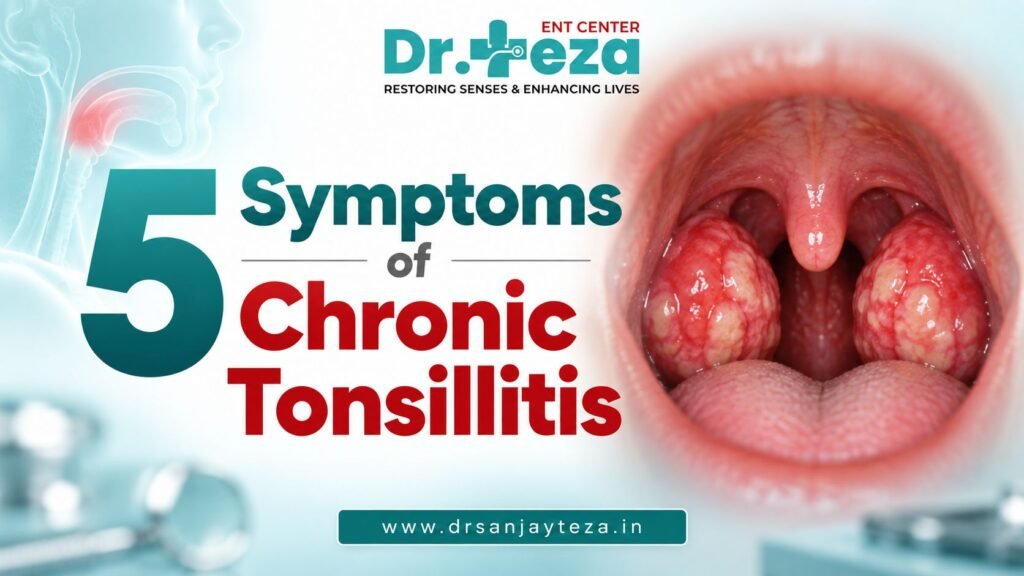
Have you been dealing with a sore throat that keeps coming back, bad breath, or swollen tonsils? These problems may seem minor at first, but when they continue for a long time, they could be linked to chronic tonsillitis. Knowing the early signs can help you understand when it is time to seek medical advice.
In this guide, we will explain the 5 symptoms of chronic tonsillitis, what may cause them, and how to know when you should see an ENT specialist. If you or your child often suffers from throat problems, this information can help you take the right step before the condition affects daily life.
What Is Chronic Tonsillitis?
Chronic tonsillitis is a long-lasting inflammation or infection of the tonsils. Unlike a short-term sore throat that gets better within a few days, chronic tonsillitis may cause ongoing or repeated throat problems. The tonsils may remain swollen or irritated, and some people may also notice bad breath, tonsil stones, throat discomfort, or tender lymph nodes in the neck.
The 5 symptoms of chronic tonsillitis discussed in this article can help you recognise the condition, but having one or more of these symptoms does not always mean you have chronic tonsillitis. An ENT specialist may need to examine your throat and review your medical history to find the actual cause.
How Does Chronic Tonsillitis Develop?
Tonsillitis can develop when the tonsils become infected by viruses or bacteria. When infections happen repeatedly or inflammation continues for a long time, the tonsils may remain irritated. Small spaces called tonsil crypts can also trap food particles, bacteria, and other debris, which may contribute to tonsil stones and bad breath.
Chronic Tonsillitis vs Recurrent Tonsillitis
These terms are related but do not mean exactly the same thing:
| Chronic Tonsillitis | Recurrent Tonsillitis |
| Symptoms may continue for a long time | Infections occur again and again |
| Throat discomfort may persist | There may be symptom-free periods |
| Tonsils may remain inflamed | Symptoms are often linked to separate episodes |
| Bad breath or tonsil stones may occur | Tonsil stones may occur in some people |
If you frequently experience a chronic sore throat, swollen tonsils, tonsil stones, or repeated throat infections, it is better to get an ENT evaluation instead of treating the symptoms repeatedly on your own.
5 Symptoms of Chronic Tonsillitis
The 5 symptoms of chronic tonsillitis commonly include a persistent sore throat, bad breath, tonsil stones or white/yellow debris, tender lymph nodes in the neck, and ongoing tonsil inflammation with swallowing discomfort. These symptoms may occur alone or together, and having them does not always mean you have chronic tonsillitis. An ENT specialist can confirm the cause through a proper examination.

1. Persistent or Recurrent Sore Throat
A sore throat that does not fully go away or keeps returning is one of the common chronic tonsillitis symptoms. You may feel ongoing irritation, dryness, or pain in the throat, especially when swallowing. Unlike a short-term sore throat caused by a common cold, persistent throat discomfort needs attention if it continues or frequently comes back.
If you regularly experience a chronic sore throat along with swollen or irritated tonsils, it is worth discussing your symptoms with an ENT specialist.
2. Persistent Bad Breath
Ongoing bad breath, also called halitosis, can be another sign of chronic tonsil problems. Inflamed tonsils and trapped food particles, bacteria, or debris inside tonsil crypts may contribute to an unpleasant smell.
If bad breath continues even after regular brushing, flossing, and tongue cleaning, check whether you also have tonsil stones, throat irritation, or other tonsil-related symptoms.
3. Tonsil Stones or White/Yellow Debris
Small white or yellow lumps on the tonsils may be tonsil stones, also known as tonsilloliths. They form when debris collects and hardens inside small pockets or crypts of the tonsils. They can sometimes cause bad breath, throat irritation, or the feeling that something is stuck in the throat.
However, white spots on tonsils do not always mean chronic tonsillitis. They can occur with different throat infections and conditions, so repeated or unexplained tonsil changes should be checked by a doctor.
4. Tender or Swollen Lymph Nodes in the Neck
The lymph nodes in your neck may become swollen or tender when your body is responding to infection or inflammation. With chronic tonsil problems, some people may notice that the glands around the neck remain uncomfortable or become tender repeatedly.
If neck swelling persists, becomes painful, grows larger, or occurs with other concerning symptoms, an ENT evaluation is important to identify the underlying cause.
5. Ongoing Tonsil Inflammation and Painful Swallowing
Chronic tonsillitis may cause tonsils to remain enlarged, red, or irritated. Some people may also experience painful swallowing, throat discomfort, or visible white/yellow patches on the tonsils.
These symptoms can also occur during acute tonsillitis and other throat infections. Therefore, their duration and pattern matter. Repeated episodes of swollen tonsils, swallowing discomfort, and throat symptoms should not be ignored, especially when they interfere with eating, drinking, sleeping, or daily activities.
If several of these signs of chronic tonsillitis occur together or keep returning, it is better to get an ENT examination instead of repeatedly treating the symptoms on your own.
What Causes Chronic Tonsillitis?
Chronic tonsillitis happens when the tonsils remain inflamed or become infected repeatedly over time. The most common causes include repeated infections, bacteria or viruses, and debris getting trapped in the small openings of the tonsils. Understanding the cause is important because the right treatment depends on what is triggering the problem.
Viral Infections
Viruses are a common cause of tonsillitis. A viral throat infection can make the tonsils red, swollen, and painful. Most viral infections improve with rest, fluids, and supportive care. However, repeated infections may contribute to ongoing tonsil problems in some people.
Bacterial Infections
Bacteria can also cause tonsillitis. Group A Streptococcus (strep bacteria) is one well-known bacterial cause. Bacterial tonsillitis may cause a sore throat, swollen tonsils, painful swallowing, fever, and white or yellow patches on the tonsils. Antibiotics may be needed when a bacterial infection is confirmed or strongly suspected by a doctor.
Repeated Tonsil Infections
Some people develop recurrent tonsillitis, meaning they have separate episodes of tonsil infection again and again. Frequent infections can keep irritating the tonsils and may eventually lead to chronic tonsil problems. Keeping a record of repeated episodes can help an ENT specialist decide whether further treatment is needed.
Tonsil Crypts and Trapped Debris
Tonsils contain small folds and openings called tonsil crypts. Food particles, mucus, bacteria, and dead cells can sometimes collect inside them. This may lead to tonsil stones, bad breath, throat irritation, or a feeling that something is stuck in the throat. Repeated tonsil debris can be associated with chronic tonsillitis, but tonsil stones alone do not always mean that a person has chronic tonsillitis.
Why Finding the Cause Matters
The 5 symptoms of chronic tonsillitis can overlap with other throat conditions, so symptoms alone cannot confirm the cause. If you have a persistent sore throat, repeated tonsil infections, tonsil stones, bad breath, swollen tonsils, or tender neck lymph nodes, an ENT specialist can examine your throat and recommend the appropriate treatment.
Chronic Tonsillitis vs Acute Tonsillitis vs Recurrent Tonsillitis
Tonsillitis does not always affect people in the same way. Acute tonsillitis usually starts suddenly and improves within a short time, while recurrent tonsillitis means repeated episodes that get better and then return. Chronic tonsillitis refers to ongoing or persistent tonsil problems that may continue for a longer period. Knowing the difference can help you understand your symptoms and decide when to consult an ENT specialist.
What Is Acute Tonsillitis?
Acute tonsillitis is a sudden inflammation or infection of the tonsils. It may cause:
- Sore throat
- Red and swollen tonsils
- Pain while swallowing
- Fever
- White or yellow patches on the tonsils
- Swollen or tender lymph nodes in the neck
It is commonly caused by viruses, although some cases are caused by bacteria. Symptoms often improve as the infection clears.
What Is Recurrent Tonsillitis?
Recurrent tonsillitis means that tonsillitis keeps coming back after previous episodes have improved. A person may feel completely well between episodes and then develop another sore throat, swollen tonsils, fever, or painful swallowing.
Frequent episodes can affect school, work, sleep, eating, and overall quality of life. If tonsillitis keeps returning, an ENT specialist can assess the pattern and discuss suitable treatment options.
What Is Chronic Tonsillitis?
Chronic tonsillitis is associated with ongoing or persistent tonsil-related symptoms. Instead of having separate attacks with long symptom-free periods, some people may have continuing throat discomfort, bad breath, tonsil stones, tonsil debris, or tender lymph nodes in the neck.
These symptoms can sometimes be confused with other throat conditions. Therefore, persistent chronic tonsillitis symptoms should be evaluated by an ENT specialist rather than treated based only on symptoms.
Chronic vs Acute vs Recurrent Tonsillitis: Quick Comparison
| Feature | Acute Tonsillitis | Recurrent Tonsillitis | Chronic Tonsillitis |
| Pattern | Sudden episode | Repeated episodes | Ongoing or persistent symptoms |
| Sore throat | Common during an episode | Returns with each episode | May persist or recur frequently |
| Tonsil swelling | Common | Usually during episodes | May continue or recur |
| Fever | Can occur | Can occur during episodes | Less typical as a constant symptom |
| Bad breath | May occur | May occur | Can be a common concern |
| Tonsil stones/debris | Possible | Possible | May occur frequently |
| Symptom-free periods | Usually after recovery | Often present between episodes | May be limited |
How Is Chronic Tonsillitis Diagnosed?
Chronic tonsillitis is diagnosed mainly through your symptoms, medical history, and an examination of your throat and tonsils. There is no single test that confirms every case. During the visit, an ENT specialist may ask about the 5 symptoms of chronic tonsillitis, such as a long-lasting or recurring sore throat, bad breath, tonsil stones, painful swallowing, and swollen or tender lymph nodes in the neck. The doctor may also ask how often you get throat infections, how long your symptoms last, and whether previous treatment helped.
Physical Examination of the Tonsils
The ENT specialist will carefully examine your mouth, throat, and tonsils for signs of inflammation. This may include:
- Red or swollen tonsils
- White or yellow patches or debris
- Tonsil stones
- Enlarged tonsils
- Signs of ongoing throat inflammation
- Tender or swollen lymph nodes in the neck
Throat Swab or Other Tests
If a bacterial infection such as strep throat is suspected, the doctor may recommend a throat swab or rapid test. These tests help identify certain bacterial infections and guide treatment. Not every person with chronic tonsillitis needs a throat test, so testing is based on the symptoms and examination.
Why an ENT Evaluation Matters
Symptoms such as a chronic sore throat, bad breath, or white spots on the tonsils can have several causes. Therefore, do not assume that these symptoms always mean chronic tonsillitis. An ENT examination can help identify the actual cause and decide whether medical treatment, monitoring, or further treatment such as tonsillectomy may be appropriate.
Chronic Tonsillitis Treatment Options
The right chronic tonsillitis treatment depends on the cause, severity, how often symptoms return, and how much they affect your daily life. Treatment may include home care, medicines, or, in some cases, tonsillectomy (tonsil removal surgery). A doctor should examine your tonsils before deciding which treatment is suitable.
Medical Treatment
If chronic tonsillitis is linked to a bacterial infection, an ENT specialist may prescribe antibiotics. Antibiotics should only be taken when recommended by a doctor and should not be started on your own. For pain, fever, or throat discomfort, your doctor may also suggest suitable medicines.
Simple measures can help reduce throat discomfort:
- Drink enough water and other healthy fluids.
- Gargle with warm salt water if advised.
- Maintain good oral hygiene by brushing and cleaning the tongue regularly.
- Get enough rest when symptoms are active.
- Avoid sharing food, drinks, or utensils during an infection.
These steps may help manage symptoms, but they do not always prevent chronic or recurrent tonsillitis from returning.
Managing Tonsil Stones and Tonsil Debris
Tonsil stones can develop when food particles, mucus, bacteria, and other debris collect in the small pockets of the tonsils. They may cause bad breath, throat irritation, or a feeling that something is stuck in the throat.
Good oral hygiene, regular hydration, and gentle gargling may help reduce debris. However, repeatedly trying to remove tonsil stones with sharp objects or force can injure the tonsils. If tonsil stones keep returning or are linked with persistent symptoms, an ENT evaluation can help identify the underlying problem.
When Is Tonsillectomy Considered?
For some people, medicines and supportive care may not provide lasting relief. An ENT specialist may consider tonsillectomy when chronic or recurrent tonsillitis is severe, keeps returning, causes significant problems, or affects daily activities and quality of life.
Tonsillectomy may also be considered when tonsil problems are associated with complications or breathing problems during sleep. The decision is individual and should be made after a proper examination and discussion with an ENT specialist.
Can Chronic Tonsillitis Be Treated Without Surgery?
Yes, chronic tonsillitis does not always require surgery. Depending on the cause and severity, symptoms may be managed with appropriate medical treatment and supportive care. However, if infections or symptoms continue despite suitable treatment, an ENT specialist may recommend further evaluation and discuss whether tonsillectomy could provide better long-term relief.
If you are experiencing several of the 5 symptoms of chronic tonsillitis, such as persistent sore throat, bad breath, tonsil stones, tender neck glands, or ongoing tonsil inflammation, it is better to get a professional ENT evaluation rather than relying only on home remedies.
Complications of Chronic or Recurrent Tonsillitis
Most cases of tonsillitis improve with proper care, but chronic or recurrent tonsillitis can sometimes lead to problems if symptoms continue or infections keep returning. Knowing these possible complications can help you understand when a simple throat problem needs an ENT evaluation.
Sleep-Related Breathing Problems
Enlarged or repeatedly inflamed tonsils can narrow the airway, especially during sleep. This may cause snoring, restless sleep, mouth breathing, or obstructive sleep apnea. In children, poor sleep can also affect daytime attention, mood, and overall well-being.
Peritonsillar Abscess
A peritonsillar abscess is a collection of pus that develops beside the tonsil. It can cause severe one-sided throat pain, difficulty swallowing, muffled speech, drooling, or difficulty opening the mouth. This needs prompt medical attention because the swelling can affect swallowing and, in severe cases, breathing.
Difficulty Swallowing and Eating
Persistent swollen tonsils can make swallowing painful or uncomfortable. A person may start avoiding food and drinks, which can increase the risk of dehydration, especially during a severe infection.
Repeated Throat Infections
One of the main concerns with recurrent tonsillitis is that throat infections may keep coming back and interfere with school, work, sleep, and everyday activities. Frequent episodes may also lead an ENT specialist to discuss whether further treatment, including tonsillectomy, is appropriate.
When Should You Seek Medical Help?
If you have persistent sore throat, repeated tonsil infections, swollen tonsils, tonsil stones, or other chronic tonsillitis symptoms, it is worth getting an ENT evaluation. Seek urgent medical care if you develop breathing difficulty, severe swallowing problems, excessive drooling, severe one-sided throat swelling, or rapidly worsening symptoms.
When Should You See an ENT Specialist?
If you have persistent or repeated throat problems, it may be time to consult an ENT specialist. You should consider an ENT consultation if you have:
- A sore throat that does not go away or keeps returning
- Frequent episodes of tonsillitis
- Persistent bad breath despite good oral hygiene
- Repeated tonsil stones or white/yellow debris on the tonsils
- Swollen or painful tonsils
- Pain or difficulty while swallowing
- Tender or swollen lymph nodes in the neck
- Enlarged tonsils that affect eating, sleeping, or breathing
If you are experiencing ongoing tonsil or throat problems, consulting an experienced specialist can help you get the right diagnosis and treatment. Dr. Sanjay Teza, an experienced ENT specialist in Varanasi, provides evaluation and treatment for chronic and recurrent tonsil problems. His extensive experience in ENT care can help patients understand whether their symptoms require medicines, regular monitoring, or further treatment.
How to Prevent Recurrent Tonsillitis
Recurrent tonsillitis can be frustrating, especially when sore throat, swollen tonsils, or difficulty swallowing keeps coming back. While every infection cannot be prevented, a few simple habits can reduce the spread of infections and support better throat health.
Practice Good Hand Hygiene
Wash your hands regularly with soap and water, especially before eating and after coughing or sneezing. Avoid touching your mouth, nose, and eyes with unwashed hands, as germs can spread this way easily.
Avoid Sharing Personal Items
Do not share water bottles, glasses, spoons, food, toothbrushes, or other items that come into contact with the mouth. If someone at home has tonsillitis, keeping personal items separate can help reduce the risk of infection.
Maintain Good Oral Hygiene
Brush your teeth twice a day and clean your tongue regularly. Good oral hygiene may help reduce the build-up of bacteria and debris around the tonsils. If you frequently develop tonsil stones, bad breath, or white spots on the tonsils, discuss these symptoms with an ENT specialist.
Stay Hydrated
Drink enough water throughout the day to prevent throat dryness and maintain normal throat function. Warm fluids may also provide temporary comfort when the throat feels irritated.
Avoid Close Contact During Infection
If you or someone around you has an active throat infection, avoid close contact where possible. Cover your mouth and nose when coughing or sneezing, and wash your hands afterwards.
Follow Your Doctor’s Treatment Plan
If a doctor prescribes treatment for a bacterial throat infection, take the medicine exactly as advised. Do not start or stop antibiotics on your own. Proper diagnosis is important because not every sore throat or episode of tonsillitis needs antibiotics.
Get Repeated Throat Infections Checked
If you frequently experience sore throat, swollen tonsils, tonsil stones, bad breath, or painful swallowing, do not keep treating the problem at home without finding the cause. Repeated episodes may need an ENT evaluation to check for recurrent or chronic tonsillitis.
Also Read: https://drsanjayteza.in/nasal-polyp-surgery-in-varanasi/
Conclusion
Knowing the 5 symptoms of chronic tonsillitis can help you recognise when repeated throat problems need medical attention. Persistent sore throat, bad breath, tonsil stones, swollen tonsils, and tender neck lymph nodes should not be ignored. Good oral hygiene, hand washing, hydration, and infection-control habits may help reduce recurrent tonsillitis. However, frequent or long-lasting symptoms may need proper evaluation by an ENT specialist. Treatment for chronic tonsillitis depends on the cause, severity, and how often symptoms return. If tonsillitis is affecting your daily life, an ENT doctor can guide you about suitable treatment options, including whether tonsillectomy may be needed.
Frequently Asked Questions
1. What are the 5 symptoms of chronic tonsillitis?
The 5 symptoms of chronic tonsillitis commonly include persistent sore throat, bad breath, tonsil stones or debris, tender neck lymph nodes, and ongoing tonsil inflammation. Painful swallowing and swollen tonsils may also occur. Having these symptoms does not confirm chronic tonsillitis, so persistent problems should be checked by an ENT specialist.
2. What does chronic tonsillitis feel like?
Chronic tonsillitis may feel like a sore or irritated throat that does not fully settle or keeps returning. Some people may also notice painful swallowing, swollen tonsils, bad breath, tonsil stones, or tender glands in the neck. Symptoms can vary from person to person depending on the underlying cause.
3. Can chronic tonsillitis cause bad breath?
Yes, chronic tonsillitis can cause bad breath, particularly when food particles, bacteria, or debris become trapped in the tonsil crypts. Tonsil stones may also contribute to persistent bad breath. If bad breath continues despite good oral hygiene, an ENT evaluation can help identify the cause.
4. Can tonsil stones be a sign of chronic tonsillitis?
Tonsil stones can occur when debris collects and hardens inside the small pockets, or crypts, of the tonsils. They are associated with chronic tonsil problems but do not always mean that a person has chronic tonsillitis. Frequent tonsil stones, bad breath, or throat discomfort should be discussed with an ENT specialist.
5. Is chronic tonsillitis the same as recurrent tonsillitis?
No, chronic tonsillitis and recurrent tonsillitis are not the same. Chronic tonsillitis usually involves ongoing or persistent symptoms, while recurrent tonsillitis refers to repeated episodes that occur over time. An ENT specialist can assess the pattern of symptoms and determine the most appropriate treatment.
6. Can chronic tonsillitis go away without surgery?
Yes, surgery is not automatically required for every person with chronic tonsillitis. Treatment depends on the cause, severity, frequency of symptoms, and response to medical care. An ENT specialist may first recommend appropriate medical management before considering tonsillectomy in suitable cases.
7. When is tonsillectomy recommended for chronic tonsillitis?
Tonsillectomy may be considered when tonsillitis is frequent, persistent, severe, causes complications, or significantly affects daily life. It may also be considered in certain cases involving enlarged tonsils and sleep-related breathing problems. The decision should be made after an ENT examination and discussion of the benefits and risks.
8. Can adults get chronic tonsillitis?
Yes, adults can develop chronic tonsillitis, although tonsillitis is more common in children. Adults may experience persistent sore throat, bad breath, tonsil stones, swollen tonsils, or repeated throat infections. If these symptoms continue or frequently return, an ENT specialist can help determine the cause.
9. Which doctor treats chronic tonsillitis?
An ENT specialist, also called an otolaryngologist, diagnoses and treats chronic tonsillitis. The doctor can examine your tonsils, review your history of throat infections, and recommend suitable treatment. If necessary, they can also assess whether tonsillectomy or further testing is appropriate.
10. When should I see an ENT specialist for tonsillitis?
You should consider seeing an ENT specialist if sore throat keeps returning, symptoms persist, tonsil stones frequently develop, or swallowing becomes difficult. Persistent swollen tonsils, bad breath, or tender neck lymph nodes also deserve medical evaluation. Seek urgent care if you develop serious difficulty breathing or swallowing.