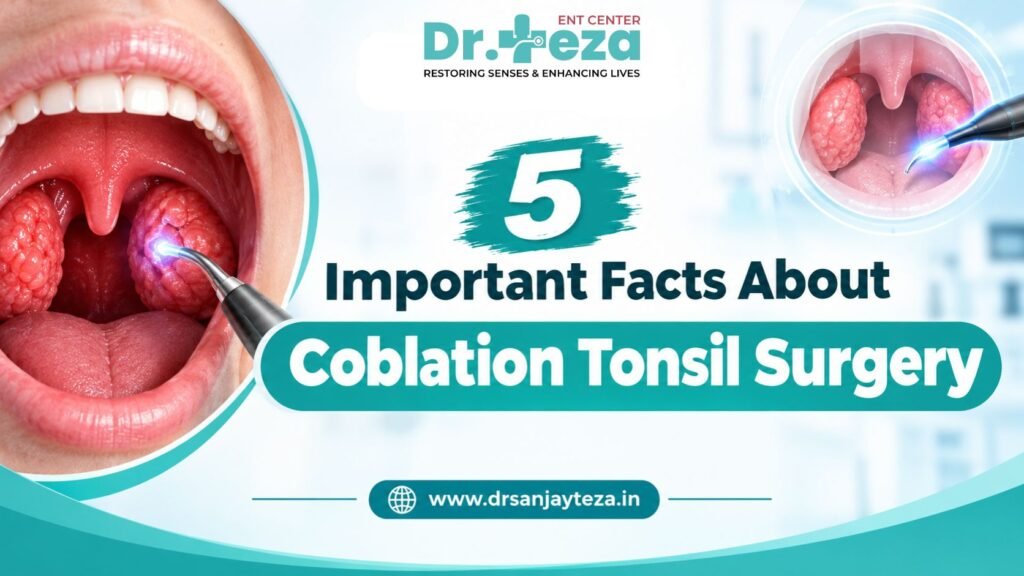
Frequent throat infections, swollen tonsils, and difficulty swallowing can affect your daily life and disturb your sleep. When medicines do not provide enough relief, an ENT specialist may recommend tonsil surgery. Coblation tonsil surgery is one option for removing tonsil tissue using radiofrequency energy and a saline-based process. But is it less painful than traditional surgery? How long does recovery take, and what risks should you know about before making a decision?
In this blog, we will explore 5 important facts about coblation tonsil surgery, including how it works, its potential benefits, possible risks, and recovery time. You will also learn how coblation compares with traditional tonsil surgery and what to consider before choosing a treatment. By the end, you will have a clearer understanding of the procedure and be better prepared to discuss your options with an ENT specialist.
Fact 1: What Is Coblation Tonsil Surgery and How Does It Work?
Coblation tonsil surgery is a surgical technique used to remove tonsil tissue with the help of radiofrequency energy and a saline solution. Unlike conventional electrocautery, which uses higher temperatures, coblation works at relatively lower temperatures to break down and remove soft tissue. It may be recommended for patients with recurrent tonsillitis or enlarged tonsils that cause problems with breathing or swallowing. However, the right treatment depends on the patient’s condition and an ENT specialist’s assessment.
How Does Coblation Tonsil Surgery Work?
During coblation tonsillectomy, the surgeon uses a specialised instrument called a coblation wand. This instrument uses radiofrequency energy in a saline solution to create a plasma field that breaks down the bonds between tissue cells, allowing the surgeon to remove the targeted tonsil tissue.
The procedure is usually performed under general anaesthesia, which means the patient is asleep during surgery. The surgeon carefully removes the planned amount of tonsil tissue and checks for bleeding before the patient is taken to the recovery area. The exact steps depend on the surgical technique and the patient’s needs.
What Is the Difference Between Coblation and Traditional Tonsil Removal?
The main difference is the technology used to remove the tonsils. Traditional tonsillectomy may involve surgical instruments such as a scalpel or techniques that use heat, while coblation uses radiofrequency energy and saline to break down tissue at relatively lower temperatures.
Here is a simple comparison:
| Feature | Coblation Tonsil Surgery | Traditional Tonsil Surgery |
| Technique | Uses radiofrequency energy and saline | May use surgical instruments or heat-based methods |
| Operating temperature | Relatively low | Depends on the technique used |
| Tissue removal | Uses a specialised coblation wand | Uses instruments selected by the surgeon |
| Recovery | May offer less early pain in some cases | Recovery varies with the technique and patient |
| Risks | Bleeding and other complications remain possible | Bleeding and other complications remain possible |
Can Coblation Remove All or Only Part of the Tonsils?
Yes. Coblation can be used for either complete or partial tonsil removal.
- Complete tonsillectomy: The surgeon removes the tonsil, including its capsule.
- Intracapsular tonsillectomy: The surgeon removes most of the tonsil tissue while leaving a thin layer near the capsule.
Partial tonsil removal may reduce pain and bleeding in selected patients, but some tissue remains and may grow back or cause symptoms again. The choice between complete and partial removal depends on the patient’s condition and the reason for surgery.
Fact 2 — What Are the Benefits of Coblation Tonsil Surgery?
Coblation tonsil surgery is a modern technique used to remove tonsil tissue with the help of radiofrequency energy and a saline-based process. It works at relatively lower temperatures than conventional electrocautery. This may offer certain benefits, but the results can vary from one patient to another. Understanding the potential benefits of coblation tonsil surgery can help you discuss your treatment options with an ENT specialist.
1. Uses Lower Temperatures to Remove Tonsil Tissue
One potential benefit of coblation tonsillectomy is that it uses lower operating temperatures than conventional electrocautery. The technique uses radiofrequency energy in a saline medium to break down tissue. This may help limit heat exposure to nearby tissues. However, it does not eliminate tissue damage or guarantee a complication-free procedure.
2. May Help Reduce Pain During Early Recovery
Throat pain is a common concern after tonsil removal surgery. Some studies suggest that coblation may reduce pain during the first few days after surgery. However, research findings are mixed, and the difference may not be significant for every patient. Patients can still experience throat pain and discomfort while swallowing, so proper pain management remains important.
3. May Offer Benefits in Controlling Blood Loss During Surgery
Coblation can help the surgeon remove tonsil tissue while managing bleeding during the procedure. Some studies have reported lower blood loss with particular surgical techniques, but the results vary depending on the method used for comparison. It is important to understand that coblation tonsil surgery does not eliminate the risk of bleeding during or after surgery.
4. May Help Some Patients Resume Normal Activities Sooner
The recovery period after tonsillectomy depends on several factors, including the patient’s age, the surgical technique, and individual healing. Some studies have reported an earlier return to normal activities with coblation compared with certain conventional methods. However, this benefit is not guaranteed. Patients should follow their ENT surgeon’s advice before returning to school, work, or exercise.
5. Can Be Used for Different Tonsil Removal Approaches
Coblation technology can be used for different surgical approaches, depending on the patient’s condition and the surgeon’s treatment plan.
- Complete tonsil removal: The tonsils and their capsules are removed.
- Partial tonsil removal: Most of the tonsil tissue is removed, while a thin layer is left behind.
Is Coblation Tonsil Surgery Better Than Traditional Tonsillectomy?
Coblation tonsil surgery may offer certain advantages, such as lower operating temperatures and potentially less pain during early recovery. However, research has not consistently shown that coblation is better than all conventional tonsillectomy techniques. The most suitable approach depends on the patient’s condition, the type of tonsil removal required, and the surgeon’s clinical judgement. Discuss the benefits, risks, and alternatives with a qualified ENT specialist before making a decision.
Fact 3 — Who Needs Coblation Tonsil Surgery, and When Is It Recommended?
Coblation tonsil surgery may be considered for people who have repeated tonsil infections, enlarged tonsils, or breathing problems during sleep. However, surgery is not necessary for everyone with tonsillitis. An ENT specialist examines the symptoms, medical history, and severity of the problem before recommending tonsil removal. The decision also depends on whether coblation is suitable for the patient’s condition.
Recurrent Tonsillitis
Tonsillitis occurs when the tonsils become inflamed, often due to a viral or bacterial infection. Common symptoms include a sore throat, fever, swollen tonsils, and pain while swallowing.
If tonsil infections happen frequently and affect daily life, an ENT specialist may consider tonsillectomy. For children, commonly used clinical guidelines support considering surgery when there are at least seven documented episodes in one year, five episodes per year for two years, or three episodes per year for three years. These are guidelines, not automatic rules, and individual circumstances also matter.
Enlarged Tonsils and Breathing Difficulties
Large tonsils can sometimes block the airway, especially during sleep. This problem can affect both children and adults.
Signs that need an ENT assessment include:
- Loud or frequent snoring.
- Pauses in breathing during sleep.
- Difficulty breathing while sleeping.
- Restless sleep or frequent waking.
- Daytime tiredness or difficulty concentrating.
Tonsil Problems in Children and Adults
Both children and adults may need tonsil surgery, but the reasons for treatment can differ. Children may be assessed for recurrent infections or sleep-related breathing problems, while adults may need evaluation for repeated tonsillitis or other persistent tonsil symptoms.
Coblation tonsil surgery is one possible surgical technique, not a treatment required for every tonsil problem. The ENT specialist will decide whether surgery is appropriate and which technique best suits the patient’s needs.
When Is Tonsil Surgery Not Necessary?
Mild or occasional tonsil infections often improve with appropriate care and do not always require surgery. If infections are infrequent, an ENT specialist may recommend monitoring symptoms and treating individual episodes as needed.
Surgery may be considered when infections are frequent or severe, breathing is affected, or complications develop. The final decision should be based on a proper medical assessment rather than tonsil size or symptoms alone.
What Should You Ask Your ENT Specialist Before Surgery?
Before deciding on coblation tonsil surgery, consider asking your ENT specialist these important questions:
- Why do I need tonsil surgery?
- Is coblation suitable for my condition?
- What are the possible benefits and risks?
- Will complete or partial tonsil removal be recommended?
- How long might recovery take?
- What other treatment options are available?
Fact 4 — How Long Does Coblation Tonsil Surgery Recovery Take?
Recovery after coblation tonsil surgery usually takes around 10–14 days, although the exact time varies from person to person. Some patients may recover sooner, while others need more time. During recovery, you may experience throat pain, difficulty swallowing, ear pain, and tiredness. Following your ENT specialist’s instructions, drinking enough fluids, and taking prescribed medicines can help you recover comfortably.
What Happens Immediately After Coblation Tonsil Surgery?
After the operation, the medical team will monitor you while you recover from anaesthesia. You may feel sleepy and experience some throat discomfort. Depending on your condition, you may return home on the same day or need to stay in the hospital overnight.
Your doctor will explain when to start drinking and eating, how to manage pain, and which activities to avoid. Follow these instructions carefully, as proper care is important for a safe recovery.
What Is the Typical Recovery Timeline After Tonsil Surgery?
Recovery after coblation tonsillectomy can vary depending on your age, the type of procedure, and your body’s healing process. Here is a general guide to what you may experience.
| Recovery stage | What you may experience | What you should do |
| First 1–2 days | Throat pain, tiredness, and discomfort while swallowing | Rest, drink fluids regularly, and follow your prescribed pain-relief plan |
| Days 3–7 | Throat pain may continue or become worse; ear pain may also occur | Continue taking medicines as prescribed and maintain fluid intake |
| Days 7–10 | Pain may gradually improve, although some discomfort can remain | Continue following your doctor’s advice about food and activities |
| Days 10–14 | Many patients are closer to their normal routine | Return to regular activities only as advised by your ENT specialist |
What Should You Eat and Drink During Recovery?
Eating and drinking can be uncomfortable after tonsil surgery, but staying hydrated is very important. Not drinking enough fluids can lead to dehydration and make recovery more difficult.
Follow your surgeon’s dietary instructions. Depending on your comfort, suitable options may include:
- Water and other fluids recommended by your doctor.
- Soft foods that are easy to swallow.
- Cool or lukewarm foods if they feel more comfortable.
- Nutritious meals that help you maintain your energy.
When Can You Return to Work, School, or Exercise?
Most patients need time away from their usual routine after tonsil surgery. Many require around 10–14 days to recover, but the time needed depends on their symptoms and the advice of their surgeon.
Keep these points in mind:
- Work and school: Return when your recovery allows and your doctor says it is appropriate.
- Exercise: Avoid strenuous exercise, heavy lifting, and sports until your surgeon confirms that it is safe.
- Daily activities: Get enough rest and increase activity gradually.
- Follow-up care: Attend appointments as advised and contact your doctor if recovery is not progressing as expected.
What Warning Signs Should You Watch for After Tonsil Surgery?
Although many patients recover without serious complications, it is important to recognise warning signs.
Seek urgent medical care if you notice:
- Fresh blood coming from your mouth or throat.
- Vomiting blood or blood clots.
- Difficulty breathing.
- Inability to drink enough fluids or signs of severe dehydration.
Fresh bleeding after tonsil surgery should never be ignored, even if the amount appears small. Go to the nearest emergency department if bleeding occurs.
Fact 5 — What Are the Risks, Side Effects, and Limitations of Coblation Tonsil Surgery?
Although coblation tonsil surgery may offer certain benefits, it is important to understand its possible risks and limitations before choosing the procedure. Like other types of tonsil surgery, it can cause pain, bleeding, and difficulty swallowing during recovery. The risks also depend on whether the surgeon removes the entire tonsil or only part of the tonsil tissue. Understanding these factors can help patients make an informed decision with their ENT specialist.
Is Coblation Tonsil Surgery Completely Painless?
No, coblation tonsil surgery is not completely painless. Some patients may experience less pain during the early stages of recovery, but this is not guaranteed. Pain levels vary depending on the surgical technique, the amount of tissue removed, and individual healing.
Common side effects after coblation tonsillectomy include:
- Throat pain: Discomfort may continue for several days after surgery.
- Pain while swallowing: Eating and drinking may be uncomfortable during recovery.
- Ear pain: Some patients feel pain in their ears because nerves in the throat and ears share pathways.
- Nausea: This may occur after general anaesthesia.
- Dehydration: Severe throat pain may make it difficult to drink enough fluids.
Can Bleeding Occur After Coblation Tonsil Surgery?
Yes, bleeding is one of the most important risks of coblation tonsil surgery. Bleeding can occur during the operation or later during recovery. Delayed bleeding may happen several days after surgery, even when the initial recovery seems normal.
Coblation uses relatively low temperatures compared with conventional electrocautery, but this does not mean that postoperative bleeding cannot occur. Research comparing surgical techniques has found that coblation may carry a higher risk of delayed bleeding in some comparisons, although the evidence has limitations.
What Are the Other Possible Complications?
In addition to pain and bleeding, coblation tonsillectomy may involve other complications.
- Infection: Some patients may develop an infection or need further medical assessment.
- Dehydration: Not drinking enough fluids can lead to dehydration and may require medical treatment.
- Anaesthesia-related complications: General anaesthesia carries risks that the surgical team will assess before the procedure.
- Delayed recovery: Some patients take longer than expected to return to their normal eating habits and daily activities.
Can Tonsils Grow Back After Coblation Surgery?
Tonsil regrowth is possible, particularly when the surgeon performs an intracapsular tonsillectomy, which removes most of the tonsil tissue but leaves a thin layer behind.
The remaining tissue may grow again in some patients, and tonsillitis symptoms may return. A small number of patients may need another operation in the future.
With an extracapsular tonsillectomy, the surgeon removes the tonsil and its capsule, making substantial regrowth uncommon. However, recurring throat symptoms can still occur for other reasons.
Your ENT specialist can explain which surgical approach is appropriate for your condition and discuss the possibility of recurring symptoms.
Is Coblation Tonsil Surgery Suitable for Everyone?
No single tonsil surgery technique is suitable for every patient. The choice depends on the reason for surgery, the patient’s age and medical history, and whether complete or partial tonsil removal is needed.
Before choosing coblation tonsil surgery, ask your ENT specialist about the expected benefits, the risk of postoperative bleeding, alternative surgical techniques, and the recovery process. Understanding these factors will help you make a decision based on your individual needs rather than the technology alone.
Why Choose Dr. Sanjay Teza for Coblation Tonsil Surgery?
Choosing the right ENT specialist is an important step when considering tonsil surgery. Patients need a doctor who understands their symptoms, explains available treatment options, and guides them through recovery. With 30+ years of experience in ENT care, Dr. Sanjay Teza is an experienced ENT specialist in Varanasi who focuses on evaluating and treating ear, nose, and throat conditions, including tonsil-related problems.

30+ Years of Experience in ENT Care
Dr. Sanjay Teza has 30+ years of experience in ENT care. He completed his medical education at Banaras Hindu University (BHU) and received further clinical training during his senior residency at Batra Hospital in Delhi. His experience covers a range of ENT conditions, including recurrent tonsillitis and other throat problems.
Evaluation and Treatment of Tonsil Problems
Before recommending tonsil surgery, an ENT specialist needs to understand the cause and severity of the problem. Dr. Teza provides ENT care for tonsil-related conditions and performs tonsillectomy when medically necessary.
During a consultation, patients can discuss their symptoms, the need for surgery, possible risks, and alternative treatments. The appropriate procedure depends on the patient’s condition and the doctor’s clinical assessment.
Modern ENT Facilities and a Patient-Centred Approach
Dr. Teza’s ENT centre in Varanasi offers modern facilities and surgical equipment for ENT care. His patient-centred approach focuses on understanding patients’ concerns and helping them make informed decisions about their treatment.
If you are considering coblation tonsil surgery, ask whether this specific technique is available and suitable for your condition. Coblation is one of several techniques used for tonsil surgery, and the right choice depends on your medical needs.
Consult an Experienced ENT Specialist in Varanasi
If you experience frequent tonsil infections, persistent throat pain, difficulty swallowing, or breathing problems during sleep, an ENT assessment can help identify the cause and determine the next steps.
Visit Dr. Sanjay Teza’s official website to learn more about his ENT services and arrange a consultation in Varanasi. Discuss the expected benefits, risks, recovery period, and available surgical options before making a decision.
Also Read: https://drsanjayteza.in/7-warning-signs-of-chronic-sinus-infection/
Conclusion
Coblation tonsil surgery is one option for removing tonsil tissue in patients who need surgical treatment for recurrent tonsillitis or enlarged tonsils.
It uses radiofrequency energy and a saline-based process and may offer certain benefits compared with some traditional surgical techniques.
However, the results, recovery time, and risks can vary from patient to patient. Understanding the benefits, possible complications, and recovery process can help you make an informed decision.
If you experience frequent throat infections, difficulty swallowing, or breathing problems during sleep, consult an ENT specialist for proper evaluation.
With 30+ years of experience in ENT care, Dr. Sanjay Teza provides ENT consultation in Varanasi to help patients understand their condition and available treatment options.
Before choosing coblation tonsillectomy, discuss its suitability, risks, and alternatives with your doctor.
Frequently Asked Questions
1. What Is Coblation Tonsil Surgery?
Coblation tonsil surgery is a procedure that uses radiofrequency energy in a saline medium to remove tonsil tissue. It works at relatively lower temperatures than conventional electrocautery. An ENT specialist can explain whether this technique is suitable for your condition.
2. Is Coblation Tonsil Surgery Better Than Traditional Tonsillectomy?
Coblation may offer benefits such as reduced early postoperative pain in some patients. However, research does not prove that it is always better than traditional tonsillectomy. The most suitable technique depends on the patient’s condition, the surgical approach, and the surgeon’s assessment.
3. How Long Does It Take to Recover From Coblation Tonsil Surgery?
Recovery often takes around 10–14 days, although some patients may need more time. Throat pain and discomfort while swallowing are common during recovery. Follow your surgeon’s advice about pain relief, hydration, diet, and returning to normal activities.
4. Is Coblation Tonsil Surgery Painful?
Yes, patients can experience throat pain after coblation tonsil surgery, even though the technique uses relatively low operating temperatures. Pain levels vary depending on the surgical approach and individual healing. Your ENT specialist can explain how postoperative pain will be managed.
5. What Are the Risks of Coblation Tonsil Surgery?
Possible risks include throat pain, bleeding, dehydration, nausea, and complications related to anaesthesia. Coblation does not eliminate the risk of bleeding after surgery. Fresh bleeding from the mouth or throat requires urgent medical assessment.
6. Who Needs Coblation Tonsil Surgery?
Coblation tonsil surgery may be considered for patients with recurrent tonsillitis, enlarged tonsils causing breathing difficulties, or certain other tonsil-related problems. However, not everyone with tonsillitis needs surgery. An ENT specialist will assess your symptoms and recommend suitable treatment.
7. Can Tonsils Grow Back After Coblation Surgery?
Tonsil regrowth is uncommon after complete tonsil removal. However, when the surgeon removes only part of the tonsil, the remaining tissue may grow or cause symptoms to return. The possibility depends on the surgical technique and the individual patient.
8. What Is the Cost of Coblation Tonsil Surgery in India?
The cost depends on the hospital, surgeon’s fees, anaesthesia, equipment, medical tests, and postoperative care. The final amount may also vary according to the patient’s condition and treatment requirements. Ask the hospital for a detailed estimate before scheduling surgery.
9. When Should I Consult an ENT Specialist for Tonsil Problems?
Consult an ENT specialist if you experience repeated tonsil infections, persistent throat pain, difficulty swallowing, or loud snoring with possible breathing pauses during sleep. A medical assessment can help identify the cause and determine whether medication, monitoring, or surgery is appropriate.