Skip to content

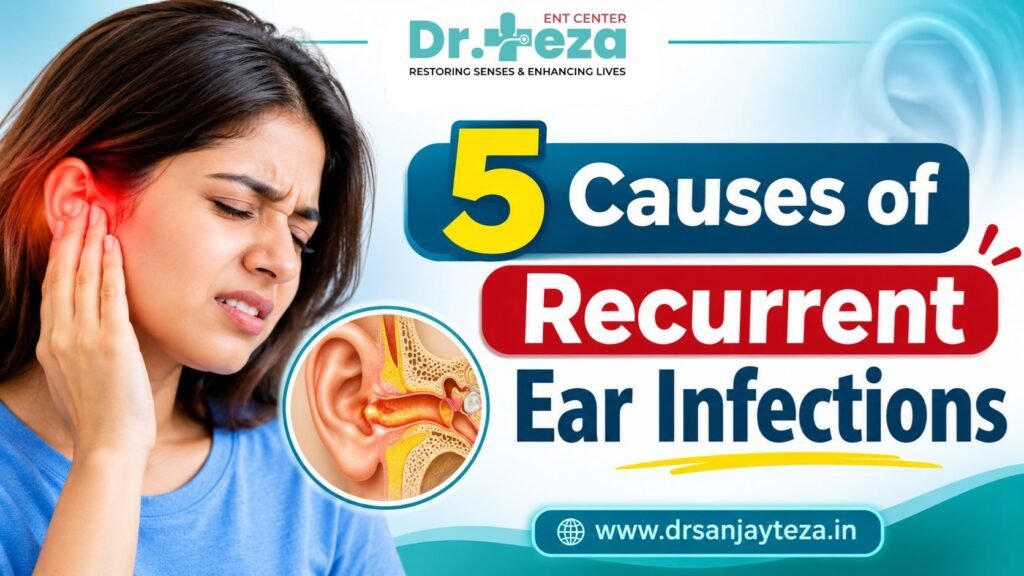
Have you ever experienced a recurrent ear infection that gets better but returns after a few days or weeks? You are not alone. Recurrent ear infections can affect both adults and children, causing ear pain, blocked ears, discharge, and hearing problems. While some infections clear up with proper care, repeated episodes may point to an underlying problem that needs attention. Ignoring these symptoms or treating them without knowing the cause may delay the right treatment.
But why do ear infections keep coming back? The reasons may include Eustachian tube problems, allergies, repeated colds, enlarged adenoids, or other ear conditions. Understanding these causes can help you take the right steps to protect your ear health. In this blog, we will explore the 5 common causes of recurrent ear infections, discuss practical prevention tips, and explain when you should consult an ENT specialist.
5 Common Causes of Recurrent Ear Infections
Recurrent ear infections occur when ear infections happen repeatedly over time. They can affect both adults and children, causing ear pain, discharge, a blocked feeling, and hearing problems. The most common reasons include problems with the Eustachian tube, repeated colds, allergies, enlarged adenoids, and conditions affecting the ear canal or eardrum. Identifying the underlying cause is important because repeated ear symptoms may require a different treatment each time.
1. Eustachian Tube Dysfunction
The Eustachian tube is a small passage that connects the middle ear to the back of the nose and throat. It helps balance pressure inside the ear and allows fluid to drain from the middle ear. When this tube becomes blocked or does not work properly, fluid can collect behind the eardrum. This may increase the risk of middle ear infections.
Common signs of Eustachian tube dysfunction include:
- A feeling of fullness or blockage in the ear.
- Muffled hearing.
- Ear pressure or discomfort.
- Popping sounds in the ear.
Colds, nasal allergies, and swelling around the opening of the tube can affect its function. If you frequently experience blocked ears or ear infections, a doctor can examine your ears and nasal passages to identify the cause. Treatment depends on the underlying problem and may help reduce repeated symptoms.
2. Repeated Colds, Respiratory Infections and Allergies
Have you noticed that your ear infection often starts after a cold or an episode of nasal congestion? There may be a connection. Colds and other respiratory infections can cause swelling in the nose and throat, which may affect the Eustachian tube. When fluid cannot drain properly from the middle ear, an infection may develop.
Allergies can also contribute to recurrent ear infections. Conditions such as allergic rhinitis may cause sneezing, a runny nose, nasal blockage, and swelling around the Eustachian tube. These changes can affect middle ear pressure and fluid drainage.
Signs that may point to an associated nasal problem include:
- Frequent sneezing or a runny nose.
- Persistent nasal blockage.
- Itchy eyes or nose.
- Ear pressure or muffled hearing after a cold.
Managing an underlying allergy or nasal condition may help some people experience fewer ear problems. However, not every blocked ear is infected, and allergy medicines do not treat every type of ear infection. A proper medical assessment can help determine the cause.
3. Enlarged Adenoids
Adenoids are small areas of tissue located behind the nose. They help the body fight germs, but they can sometimes become enlarged or inflamed. Because the adenoids are close to the openings of the Eustachian tubes, enlargement may interfere with normal ear ventilation and fluid drainage.
This is one reason some children experience recurrent ear infections or fluid buildup behind the eardrum. Persistent fluid can also cause hearing difficulties, even when there is no active infection.
Possible signs of enlarged adenoids include:
- Frequent nasal blockage.
- Mouth breathing.
- Snoring during sleep.
- Repeated ear infections.
- Reduced hearing or difficulty responding to sounds.
If a child repeatedly develops ear infections, an ENT specialist may examine the ears and assess whether enlarged adenoids are contributing to the problem. Treatment depends on the child’s symptoms and examination findings. Although surgery may be considered in selected cases, not every child with enlarged adenoids needs an operation.
4. Water Exposure, Ear Canal Irritation and Incorrect Ear Cleaning
Repeated infections do not always affect the middle ear. Sometimes, the problem develops in the outer ear canal, which is the passage leading to the eardrum. This condition is called otitis externa, also known as swimmer’s ear.
Frequent swimming or prolonged moisture can weaken the ear canal’s natural protective barrier. Scratching the ear or using cotton buds, hairpins, and other objects to clean it can also damage the delicate skin. This damage may allow germs to cause an infection.
Common symptoms of an outer ear infection include:
- Itching inside the ear.
- Pain or tenderness, especially when touching the outer ear.
- Redness or swelling of the ear canal.
- Fluid or discharge from the ear.
To reduce the risk, avoid inserting objects into your ears and follow appropriate ear-drying advice after swimming. Do not use ear drops without medical advice if you have ear discharge, a suspected eardrum perforation, or an unexplained ear problem. Repeated itching or discharge should be examined to identify the actual cause.
5. Persistent Ear Disease, Eardrum Perforation or Other Underlying Conditions
Sometimes, what appears to be a series of ear infections may actually be a persistent ear problem that has not fully resolved. For example, an infection may be associated with a hole in the eardrum, allowing fluid or discharge to escape from the middle ear. Some people may experience repeated discharge, hearing changes, or ongoing discomfort.
Another condition that requires attention is cholesteatoma, an abnormal collection of skin cells in the middle ear or nearby area. It can cause persistent or recurrent ear discharge and may damage nearby structures if left untreated.
Certain health conditions can also increase the risk of specific ear infections. For example, people with poorly controlled diabetes have a higher risk of some serious outer ear infections.
Warning signs that need medical attention include:
- Ear discharge that persists or keeps returning.
- Hearing loss or a persistent blocked sensation.
- Repeated ear pain despite treatment.
- Unpleasant-smelling discharge.
- Symptoms that do not improve as expected.
An ENT specialist can examine the ear canal and eardrum to determine whether there is an active infection, a perforation, or another underlying condition. Early assessment can help identify the right treatment and reduce the risk of complications.
When Should You See an ENT Specialist for Recurrent Ear Infections?
If you or your child experiences ear pain, discharge, or hearing problems again and again, it is important to find out the cause. Recurrent ear infections may be linked to allergies, Eustachian tube problems, or other ear conditions that need proper treatment. While some ear infections improve within a few days, repeated or persistent symptoms should not be ignored. An ENT specialist can examine your ears, identify the possible cause, and recommend suitable treatment.
Signs That You Should Consult an ENT Specialist
Consider consulting an ENT specialist if you experience any of the following:
- Repeated ear infections: Your ear infection clears up but returns frequently.
- Persistent ear pain: Earache continues for more than a few days or keeps coming back.
- Ear discharge: Fluid, pus, or blood comes out of your ear.
- Hearing difficulties: You notice muffled hearing, a blocked sensation, or difficulty understanding conversations.
- Frequent ear blockage: Your ears repeatedly feel full or blocked, especially after a cold.
- Recurring symptoms in children: Your child frequently pulls their ears, becomes unusually irritable, or seems unable to hear clearly.
- Symptoms that do not improve: Your condition gets worse or does not improve as expected after treatment.
These symptoms do not always mean you have an active ear infection. An ENT examination can help identify whether the problem involves the outer ear, middle ear, eardrum, or Eustachian tube.
When Do Recurrent Ear Infections Require Urgent Medical Attention?
Some ear symptoms may indicate a serious problem and require urgent medical assessment. Seek urgent care if you experience:
- Sudden or significant hearing loss.
- Swelling, redness, or severe pain behind the ear, especially if the ear starts sticking out.
- Severe dizziness, facial weakness, or a severe headache.
- High fever with worsening ear symptoms or feeling seriously unwell.
- Severe or rapidly worsening pain or other concerning new symptoms.
Why Is an ENT Examination Important?
Repeated ear infections may have different causes, so the right treatment depends on the underlying problem. An ENT specialist may examine your ear canal and eardrum using an otoscope and recommend a hearing test or other investigations when needed. The doctor can then determine whether you need medication, follow-up care, or further treatment.
If you are experiencing recurrent ear infections in Varanasi, consider consulting Dr. Sanjay Teza for an appropriate ENT evaluation. Avoid using leftover antibiotics or ear drops without medical advice, as the wrong treatment may not address the actual cause of your symptoms.
Why Choose Dr. Sanjay Teza for Recurrent Ear Infections?
If you experience recurrent ear infections, finding the cause is important for getting the right treatment and reducing the risk of future episodes. Dr. Sanjay Teza is an experienced ENT specialist in Varanasi with over 30+ years of experience in ear, nose, and throat care. An alumnus of Banaras Hindu University (BHU), he completed his MBBS and Master’s in ENT and further developed his clinical skills during his senior residency at Batra Hospital, Delhi.
Dr. Sanjay Teza provides ENT care with a focus on understanding patients’ symptoms and identifying the possible causes of repeated ear problems. An ENT evaluation may include examining the ear canal and eardrum, reviewing previous infections, and recommending hearing tests or other investigations when needed. His ENT centre is equipped with facilities that support specialised ENT care. If you have frequent ear pain, recurring ear discharge, blocked ears, or hearing difficulties, consulting an ENT specialist in Varanasi can help you understand the underlying problem and explore suitable treatment options. Early assessment is particularly important when symptoms persist or keep returning.
Also Read: https://drsanjayteza.in/5-important-facts-about-coblation-tonsil-surgery/
Conclusion
Recurrent ear infections can cause repeated ear pain, discharge, blocked ears, and hearing difficulties in both adults and children.
Common causes include Eustachian tube dysfunction, allergies, frequent colds, enlarged adenoids, and underlying ear conditions.
Understanding the causes of recurrent ear infections can help you take the right steps to protect your ear health.
Avoid inserting objects into your ears, manage allergies with proper medical advice, and never use leftover ear drops without consulting a doctor.
If ear infections keep coming back, a timely examination can help identify the problem and guide suitable treatment.
Do not ignore persistent ear discharge, hearing changes, or repeated ear pain.
Consult Dr. Sanjay Teza, an experienced ENT specialist in Varanasi, for an appropriate evaluation of recurring ear problems.
Frequently Asked Questions
1. What are the common causes of recurrent ear infections?
Recurrent ear infections can occur due to Eustachian tube dysfunction, repeated colds, allergies, enlarged adenoids, or ongoing ear problems. Water exposure and ear canal irritation can also cause repeated outer ear infections. Identifying the cause helps a doctor recommend suitable treatment.
2. Why do ear infections keep coming back in adults?
Ear infections may keep returning in adults because of nasal allergies, Eustachian tube problems, persistent middle ear disease, or repeated irritation of the ear canal. Sometimes, ear pain is caused by conditions other than an infection. An ENT examination can help identify the reason.
3. Why does my child keep getting ear infections?
Children are more likely to develop middle ear infections because their Eustachian tubes are smaller and less effective at draining fluid. Frequent colds and enlarged adenoids may also contribute to repeated infections. Consult a doctor if infections keep returning or your child has hearing difficulties.
4. Can allergies cause recurrent ear infections?
Yes, allergies can cause swelling and congestion around the nose and affect Eustachian tube function. This may lead to fluid buildup in the middle ear and increase the risk of ear problems. However, allergies do not always mean an active ear infection is present.
5. How many ear infections are considered recurrent?
In children, recurrent acute middle ear infections are commonly defined as three or more separate episodes within six months, or four or more within 12 months, with at least one episode in the previous six months. A doctor can assess whether the pattern meets this definition and whether further evaluation is needed.
6. What are the symptoms of recurrent ear infections?
Common symptoms include ear pain, a feeling of fullness, muffled hearing, and fluid or discharge from the ear. Children may also become irritable, develop a fever, or have difficulty sleeping. Repeated symptoms should be assessed by a healthcare professional to confirm the cause.
7. How can I prevent recurrent ear infections?
You may reduce the risk by avoiding smoke exposure, managing nasal allergies with medical advice, keeping recommended vaccinations up to date, and avoiding objects inside the ear canal. Follow your doctor’s treatment instructions and seek reassessment if symptoms return. Not all ear infections can be prevented.
8. Can recurrent ear infections cause hearing loss?
Yes, recurrent or persistent ear problems can affect hearing, particularly when fluid builds up behind the eardrum. Hearing difficulties are often temporary, but some chronic ear conditions can cause lasting damage. Seek medical advice if hearing changes persist or keep returning.
9. When should I see an ENT specialist for recurrent ear infections?
Consult an ENT specialist if ear infections repeatedly return, discharge persists, hearing becomes reduced, or symptoms do not improve as expected. Swelling behind the ear, sudden hearing loss, facial weakness, or severe dizziness requires urgent medical assessment. Early evaluation can help identify the underlying cause.
10. Can recurrent ear infections be treated permanently?
The outcome depends on the cause of the repeated infections. Treating contributing problems, such as certain nasal conditions or persistent ear disease, may help reduce future episodes. However, no treatment can guarantee that ear infections will never return, so follow-up may be necessary.