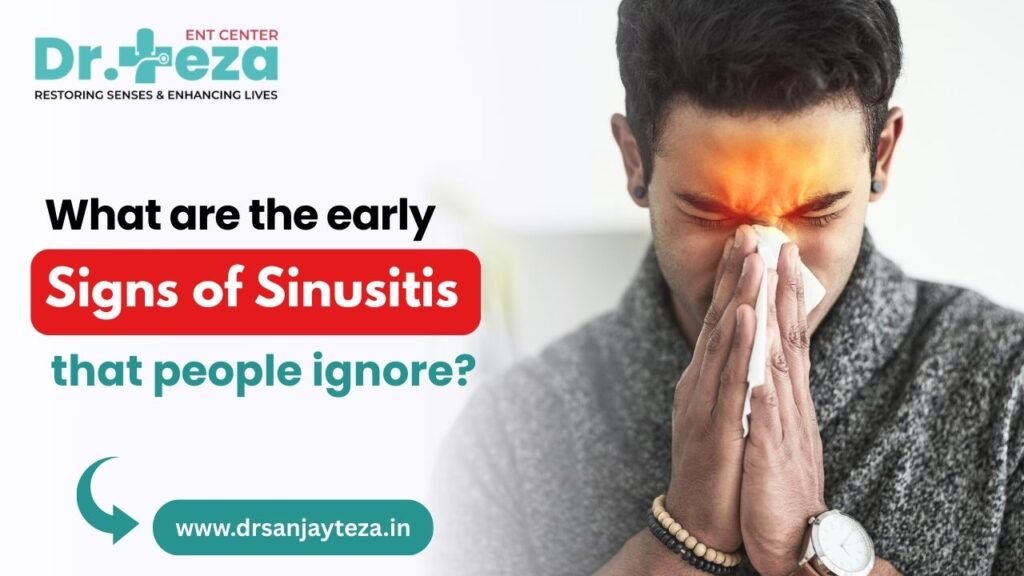
Sinus problems are very common, but many people don’t realize when a simple cold starts turning into something more serious. The early signs of sinusitis are often mild at first—like a blocked nose, headache, or facial pressure—so people tend to ignore them. Busy routines, changing weather, dust, and pollution can make these symptoms feel “normal,” but ignoring them can allow the infection to grow and cause long-term sinus issues.
If you’ve been dealing with repeated cold-like symptoms, facial pain, or breathing discomfort, this blog will help you understand what your body is trying to tell you. We’ll explain the warning signs in simple words, why they are often missed, and what you can do early to protect your sinus health and avoid chronic sinus problems.
What is sinusitis?
Sinusitis is a condition in which the lining of the sinuses (air-filled spaces around the nose, eyes, and forehead) becomes swollen or infected. When these spaces get blocked due to mucus buildup, germs can grow easily and cause infection. This leads to common symptoms of sinusitis such as nasal congestion, facial pressure, headache, thick nasal discharge, and breathing difficulty. Many people ignore the early signs of sinusitis because they feel similar to a common cold or seasonal allergy.
There are different types of sinusitis based on how long the problem lasts. Acute sinusitis usually follows a cold and lasts up to 10 days, while subacute sinusitis may continue for a few weeks. When sinus problems last for more than 12 weeks or keep coming back, it is called chronic sinusitis. Understanding these types and the early symptoms of sinus infection helps people take timely action and prevent long-term sinus problems.
Early Signs of Sinusitis People Ignore
Many people experience cold, cough, or allergy symptoms and assume they will go away on their own. However, these can actually be the early signs of sinusitis. When sinus cavities become blocked and infected, the symptoms may start mild but slowly worsen. Recognizing the early symptoms of sinus infection can help you take timely action and prevent chronic sinus problems.
1. Constant Nasal Blockage or Stuffy Nose
A blocked or congested nose that lasts for many days is one of the most common symptoms of sinusitis. If nasal congestion does not improve with usual cold medicines, it may be a sinus problem. Difficulty in breathing through the nose, especially on one side, is a key warning sign.
2. Facial Pain, Pressure, or Heaviness
Pain or pressure around the forehead, cheeks, eyes, or nose is a classic sinus problem symptom. This discomfort often increases when you bend forward or lie down. Many people mistake this for a normal headache, but it can be an early sign of a sinus infection.
3. Thick Yellow or Green Nasal Discharge
When mucus becomes thick and changes color, it may indicate an infection inside the sinuses. This is different from the clear discharge seen in allergies or the common cold. Persistent colored discharge is an important sign of sinusitis in adults.
4. Post-Nasal Drip and Frequent Throat Clearing
Mucus dripping from the back of the nose into the throat can cause irritation, a sore throat, and frequent coughing. This post-nasal drip is a common early symptom of sinus infection that people often ignore.
5. Dull Headache or Heaviness in the Head
A dull, continuous headache—especially in the morning—can be linked to blocked sinuses. Unlike migraine, sinus headache symptoms are often felt with facial pressure and nasal congestion.
6. Reduced Sense of Smell or Taste
Blocked sinuses can affect your ability to smell and taste food properly. If you notice reduced smell along with nasal congestion, it could be one of the early signs of sinusitis.
7. Bad Breath Despite Oral Hygiene
Persistent bad breath, even after brushing, may be caused by infection and mucus buildup in the sinuses. This is an overlooked but helpful sign of sinus infection.
8. Tiredness and Low Energy
Feeling unusually tired, weak, or low on energy can happen when your body is fighting a sinus infection. Poor sleep due to blocked breathing can also add to this fatigue.
Why People Ignore Early Sinusitis Symptoms
Many people overlook the early signs of sinusitis because they feel very similar to a common cold or seasonal allergies. Symptoms like nasal congestion, mild headache, runny nose, or facial pressure are often dismissed as “normal” and expected to go away on their own. Since these early symptoms of sinus infection usually start slowly, people delay proper care and continue with home remedies or over-the-counter medicines, thinking the problem is minor.
When Should You See an ENT Specialist?
Many people ignore the early signs of sinusitis and keep treating themselves at home, thinking the problem will go away on its own. However, if sinus symptoms last longer than 7–10 days or keep coming back again and again, it is a clear sign that you should consult an ENT specialist. Timely medical advice can prevent simple sinus problems from turning into chronic sinusitis or leading to further complications.
You should visit an ENT doctor if you notice persistent nasal congestion, facial pain or pressure, thick yellow or green nasal discharge, sinus headache, or reduced sense of smell. These are common symptoms of sinusitis that should not be ignored, especially when they start affecting your daily life, sleep, or work.
Warning Signs That Need Medical Attention
- Sinus symptoms lasting more than 10 days without improvement
- Severe facial pain or pressure around the eyes, cheeks, or forehead
- Repeated sinus infections within a few months
- Fever, along with nasal blockage and sinus pain
- Difficulty breathing through the nose or constant post-nasal drip
- Worsening headache that does not respond to basic medicines
How Is Sinusitis Diagnosed?
Sinusitis is diagnosed based on your symptoms and how long they last. When the early signs of sinusitis, like nasal congestion, facial pain, headache, or thick nasal discharge, continue for more than 7–10 days, an ENT specialist may suspect a sinus infection rather than a common cold. A basic examination of the nose and throat helps identify swelling or blockage.
If symptoms of sinusitis are severe or keep coming back, the doctor may use nasal endoscopy to look inside the sinuses. In long-standing or chronic cases, a CT scan of the sinuses may be advised to check for infection, blockage, or structural issues.
Prevention Tips to Avoid Sinus Infections
Preventing sinus problems starts with small daily habits that protect your nose and sinuses from infection. When you take care of your nasal health, you reduce the risk of developing infections and noticing the early signs of sinusitis later. Simple changes in lifestyle can help keep sinusitis symptoms, nasal congestion, and sinus headaches away.
Practical tips to prevent sinus infections:
- Keep your nose clean: Rinse your nose gently with saline spray or steam inhalation to clear dust, pollution, and mucus that can cause sinus blockage.
- Stay hydrated: Drinking enough water helps thin mucus and prevents sinus congestion, lowering the chances of sinus infection symptoms.
- Manage allergies: Allergies can block the sinuses and lead to sinusitis. Use doctor-advised allergy care to avoid nasal swelling and sinus pressure.
- Avoid polluted air and smoke: Dust, smoke, and strong smells irritate the sinuses and increase sinus problem symptoms. Wear a mask in heavy pollution if needed.
- Maintain indoor humidity: Dry air can irritate nasal passages. Use a humidifier in dry seasons to keep sinuses moist and healthy.
- Boost immunity: Eat a balanced diet, sleep well, and manage stress to help your body fight infections naturally.
- Treat colds early: Do not ignore long-lasting cold symptoms. Early care can prevent a simple cold from turning into sinusitis.
Also Read: https://drsanjayteza.in/why-does-nose-block-more-at-night/
Conclusion
Ignoring the early signs of sinusitis may seem harmless at first, but it can lead to long-term sinus problems and repeated infections. Symptoms like nasal congestion, facial pressure, sinus headache, and thick nasal discharge should not be taken lightly. Early care helps prevent acute sinusitis from turning into chronic sinusitis, which is harder to treat. Simple lifestyle changes, timely treatment, and proper nasal care can protect your sinuses and improve breathing comfort. Paying attention to sinusitis symptoms in adults can save you from ongoing pain and discomfort. If symptoms keep coming back, consulting an ENT specialist at the right time can help you get a proper diagnosis and long-lasting relief.
Frequently Asked Questions
1. What are the early signs of sinusitis?
The early signs of sinusitis include a blocked nose, facial pressure, headache, thick yellow or green mucus, and post-nasal drip. These sinusitis symptoms often start mild and feel like a common cold. If they last more than a week, it may indicate a sinus infection. Early attention can prevent the problem from becoming chronic.
2. How long do sinusitis symptoms usually last?
Mild sinus infection symptoms may last 7 to 10 days and improve with basic care. If nasal congestion, sinus pain, and headache continue beyond 10 days, it may point to bacterial sinusitis. Long-lasting symptoms can increase the risk of chronic sinusitis. Early treatment helps in faster recovery.
3. Can sinusitis be caused by allergies?
Yes, allergies can block the nasal passages and cause swelling in the sinuses, leading to sinus problem symptoms. This blockage can trap mucus and allow infection to grow. People with frequent allergies are more likely to notice early signs of sinusitis. Managing allergies can reduce the risk of sinus infections.
4. How can I prevent frequent sinus infections?
You can prevent sinus infections by staying hydrated, avoiding dust and pollution, and keeping your nose clean with a saline spray or steam. Treating colds early and managing allergies also reduces sinus blockage and infection risk. Healthy daily habits help lower the chances of recurring sinusitis symptoms.
5. When should I see a doctor for sinus problems?
You should see a doctor if sinus symptoms last more than 10 days, come back often, or cause severe facial pain and headache. Difficulty in breathing through the nose and fever with sinus pain are also warning signs. Early medical advice helps control sinus infection symptoms before they become chronic.