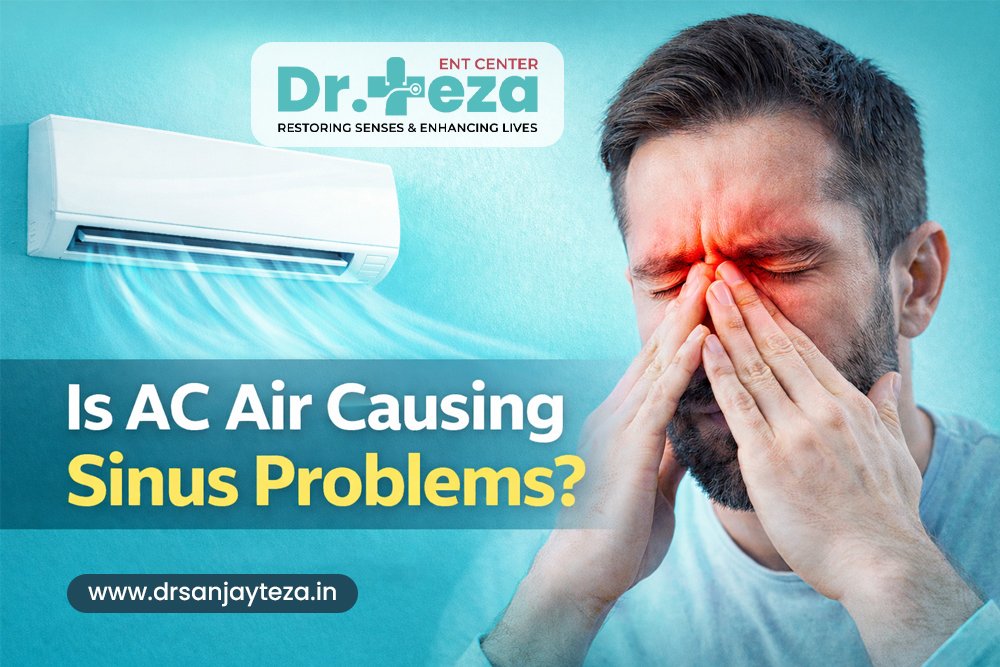
Many people love staying in air-conditioned rooms, especially during the hot summer months. But have you ever noticed a blocked nose, sinus pressure, or headache after sitting in AC for a long time? This makes many people wonder — is AC air causing sinus problems? While air conditioners make indoor spaces comfortable, the cold and dry air can sometimes irritate the nose and sinuses, especially for people who already have allergies or sinus issues.
The good news is that sinus discomfort from AC can often be prevented with the right care and awareness. In this blog, we will explain how AC air causing sinus problems, affects your nose, what symptoms to watch for, and simple ways to protect your sinuses. With expert insights from Dr. Sanjay Teza, an experienced ENT specialist in Varanasi, you will also learn when it is important to consult a doctor for proper sinus treatment.
Can Air Conditioning Really Cause Sinus Problems?
Many people often wonder if AC air causing sinus problems is a real issue. The simple answer is that air conditioning itself does not directly cause sinus infections, but it can create conditions that irritate the nasal passages and trigger sinus discomfort. Cold and dry air from an AC can affect the natural moisture inside the nose, which may lead to nasal dryness, sinus pressure, or a blocked nose, especially in people who already have sinus sensitivity.
Common Ways AC Air Can Affect Your Sinuses
1. Dry Air Irritates the Nasal Passages
Air conditioners remove humidity from indoor air. When the air becomes too dry, it can dry out the mucus lining inside the nose. This irritation may lead to sinus congestion, nasal dryness, and sinus headaches.
2. Circulation of Dust and Allergens
If AC filters are not cleaned regularly, they may circulate dust, pollen, mold spores, and bacteria in the room. Breathing these allergens can trigger allergic rhinitis, sneezing, and sinus inflammation.
3. Sudden Temperature Changes
Moving frequently between hot outdoor weather and very cold indoor AC environments can affect the blood vessels in the nasal passages. This sudden change may cause nasal swelling, sinus pressure, and a blocked nose.
4. Poor AC Maintenance
Dirty filters, clogged ducts, and mold buildup inside air conditioners can worsen indoor air quality. This may increase the chances of air conditioner sinus irritation or allergy symptoms.

How AC Air Triggers Sinus Problems
Air conditioners do not directly cause sinus infections, but certain conditions created by AC can irritate the nasal passages and trigger sinus symptoms. When people spend long hours in air-conditioned rooms, the cold and dry air can affect the natural moisture inside the nose, which may lead to congestion, sinus pressure, or irritation. This is one of the main reasons many people search for AC air causing sinus problems.
Below are some common ways air conditioning can trigger sinus discomfort.
1. Dry Air Irritates the Nasal Passages
Air conditioners remove humidity from the air to cool the room. When the air becomes too dry, it can dry out the mucus lining inside the nose and sinuses. This lining normally helps trap dust and germs. When it becomes dry, the nose may feel irritated, leading to sinus pressure, nasal dryness, and headaches.
2. Circulation of Dust and Allergens
If AC filters are not cleaned regularly, they can collect dust, pollen, mold spores, and other allergens. These particles can circulate in the room and enter the nose while breathing. For people with allergies, this may trigger sneezing, sinus congestion, and allergy-related sinus problems in AC rooms.
3. Sudden Temperature Changes
Moving frequently between very hot outdoor temperatures and extremely cold AC environments can affect the blood vessels inside the nose. These vessels may swell due to temperature changes, which can cause nasal blockage, sinus pressure, and discomfort.
4. Poor AC Maintenance
Dirty air conditioners can become a breeding ground for bacteria and mold. When these microorganisms spread through the air, they may irritate the nasal passages and worsen sinusitis symptoms, especially in people with sensitive sinuses.
5. Reduced Air Circulation in Closed Rooms
Many AC rooms remain closed for long periods with little fresh air entering. This can cause indoor air to become stale and allow allergens to build up. Poor ventilation can increase the chances of AC sinus irritation, headaches, and breathing discomfort.
Symptoms of Sinus Problems Caused by AC
If you often sit or sleep in an air-conditioned room and start feeling discomfort in your nose or head, it could be a sign that AC air causing sinus problems is affecting you. Cold and dry air from air conditioners can irritate the nasal lining, making the sinuses inflamed or blocked. For people who already have allergies or sinusitis, these symptoms may appear more quickly.
Common Symptoms to Watch For
1. Blocked or Stuffy Nose: One of the most common signs is a blocked nose after sitting in AC for a long time. Dry air can irritate the nasal passages and cause swelling, making it harder to breathe normally.
2. Sinus Pressure or Facial Pain: You may feel pressure around the forehead, cheeks, or eyes. This happens when the sinus cavities become inflamed due to dry AC air.
3. Sinus Headache: Many people experience a dull headache, especially in the forehead area, when their sinuses are irritated by air conditioning.
4. Dry Nose and Throat: Air conditioners reduce humidity in the room. This can make your nose, throat, and nasal passages feel dry or irritated, leading to discomfort.
5. Sneezing or Runny Nose: If the AC filter contains dust or allergens, it can trigger allergy-like symptoms such as sneezing, a runny nose, or nasal irritation.
6. Post-Nasal Drip: Some people may feel mucus dripping down the throat, known as post-nasal drip, which can cause throat irritation or coughing.
When Symptoms May Become Serious
Occasional symptoms are common, but if AC air causing sinus problems leads to symptoms that last more than a few days—such as severe sinus pain, thick nasal discharge, or frequent headaches—it may indicate sinusitis or nasal allergy. In such cases, consulting an ENT specialist in Varanasi like Dr. Sanjay Teza can help identify the exact cause and provide the right treatment.
How to Prevent Sinus Problems While Using AC
If you often feel that AC air causing sinus problems is affecting your comfort, a few simple changes can help protect your nose and sinuses. Air conditioners themselves are not harmful, but improper use, very cold temperatures, or poor maintenance can trigger sinus congestion, dryness, and headaches. Following these practical tips can help reduce the chances of AC-related sinus irritation.
Maintain Proper Indoor Humidity
Air conditioners remove moisture from the air, which can dry out the nasal passages. When the nose becomes dry, it becomes more sensitive to irritation and infection. Try to keep indoor humidity between 30–50%. Using a humidifier in AC rooms can help maintain balanced moisture and prevent dry air sinus irritation.
Keep AC Filters Clean
Dirty AC filters can circulate dust, pollen, mold, and other allergens, which may trigger sinus allergies and nasal blockage. Cleaning or replacing filters regularly—usually every 2 to 4 weeks during heavy usage—helps improve indoor air quality and reduces the risk of air conditioner sinus problems.
Set a Comfortable AC Temperature
Extremely cold temperatures can irritate the nasal lining and cause sinus pressure or a blocked nose. Experts recommend setting your AC temperature between 23°C and 25°C. This helps maintain comfort while reducing the chances of AC sinusitis symptoms.
Stay Hydrated
Drinking enough water helps keep the mucus lining in the nose moist, which is important for protecting the sinuses. Proper hydration also helps the body flush out irritants that may trigger sinus congestion in AC environments.
Use Saline Nasal Spray or Steam Inhalation
Saline sprays or mild steam inhalation can help clear dust and allergens from the nasal passages. This simple habit keeps the nose moisturized and can reduce symptoms like AC causing blocked nose or sinus headache.
Allow Fresh Air Circulation
Rooms with constant AC use may have stale indoor air. Opening windows occasionally or allowing some fresh air circulation can help reduce indoor allergens and improve breathing comfort.
When Should You See an ENT Doctor?
Sometimes, mild sinus discomfort in an AC room improves on its own. However, if you frequently experience AC air causing sinus problems such as constant nasal blockage, facial pressure, or headaches, it may be time to consult an ENT doctor. Persistent sinus irritation can indicate conditions like sinusitis, allergic rhinitis, or nasal inflammation, which need proper medical evaluation.
Signs You Should Visit an ENT Specialist
You should consider seeing an ENT doctor if you notice:
- Blocked nose lasting more than 7–10 days
- Severe sinus pressure or facial pain
- Frequent sinus headaches
- Thick yellow or green nasal discharge
- Difficulty breathing through the nose
- Fever along with sinus symptoms
- Repeated sinus infections after staying in AC rooms
Expert Advice from Dr. Sanjay Teza
According to Dr. Sanjay Teza, an experienced ENT specialist in Varanasi, many patients visit the clinic with complaints like blocked nose, sinus pressure, headaches, and sneezing after spending long hours in air-conditioned rooms. While AC air causing sinus problems is common, the air conditioner itself is usually not the direct cause of sinus infection. The main issue is cold, dry air and unclean AC filters, which can irritate the nasal passages and trigger sinus congestion or allergies.
Dr. Teza explains that air conditioners often reduce humidity in the room, which can dry out the lining of the nose and sinuses. When the nasal passages become dry, they lose their natural ability to filter dust, pollen, and germs. This can lead to symptoms such as sinus headache, nasal blockage, post-nasal drip, and throat irritation. In some cases, people with allergic rhinitis or chronic sinusitis may feel their symptoms worsen in AC environments.
To reduce the risk of air conditioner sinus problems, Dr. Sanjay Teza recommends a few simple precautions:
- Keep the AC temperature between 23 and 25°C to avoid sudden temperature changes.
- Clean or replace AC filters regularly to prevent dust, mold, and allergens from circulating in the air.
- Maintain proper indoor humidity levels to protect the nasal lining from dryness.
- Stay well hydrated and consider using saline nasal sprays if you often experience nasal dryness.
- Avoid sitting directly in front of the cold air flow from the AC.
Also Read: https://drsanjayteza.in/what-is-sleep-apnea/
Conclusion
In many cases, AC air causing sinus problems is linked to dry air, dust, and sudden temperature changes rather than the air conditioner itself. When the air becomes too cold or lacks humidity, it can irritate the nasal passages and lead to symptoms like sinus pressure, blocked nose, sinus headache, and throat dryness. Maintaining a proper AC temperature, cleaning filters regularly, and keeping the indoor air balanced can help reduce the risk of air conditioner sinus issues. People who already suffer from allergies or sinusitis may be more sensitive to AC environments. If sinus symptoms continue for several days or become severe, it is important to consult an ENT specialist in Varanasi for proper diagnosis and treatment. Early care can help prevent long-term sinus complications and keep your breathing comfortable.
Frequently Asked Questions
1. Can AC air cause sinus problems?
Yes, AC air causing sinus problems is possible because air conditioners reduce humidity and circulate indoor air. Dry air can irritate the nasal passages and lead to symptoms such as nasal congestion, sinus pressure, and headaches. Dirty AC filters may also spread dust and allergens that worsen sinus irritation.
2. Why does my nose get blocked when I sit in AC?
Your nose may get blocked in AC because cold and dry air can irritate the lining of the nasal passages. This irritation can cause swelling and excess mucus production, leading to nasal congestion. People with allergies or sinusitis often experience this problem more frequently.
3. Can sleeping in AC cause sinus infection?
Sleeping in AC does not directly cause a sinus infection, but it can create conditions that trigger sinus irritation or congestion. Prolonged exposure to cold, dry air may weaken the nasal lining and make it easier for allergens or germs to affect the sinuses, especially if the AC filters are not clean.
4. What is the best AC temperature to prevent sinus problems?
Experts recommend keeping the AC temperature between 23°C and 25°C to avoid sudden temperature changes that may irritate the sinuses. Extremely cold air can dry out the nasal passages and increase the chances of sinus discomfort.
5. How can I prevent sinus problems while using AC?
To prevent sinus problems from air conditioning, keep AC filters clean, maintain proper humidity levels, stay hydrated, and avoid sitting directly in front of cold air. Using saline nasal sprays and ensuring proper room ventilation can also help protect your nasal passages from dryness and irritation.
6. When should I see an ENT doctor for sinus problems?
You should consult an ENT specialist if sinus symptoms such as severe facial pain, thick nasal discharge, fever, or persistent congestion last for more than a week. Early evaluation by an expert like Dr. Sanjay Teza, ENT specialist in Varanasi, can help identify the cause and provide the right treatment.