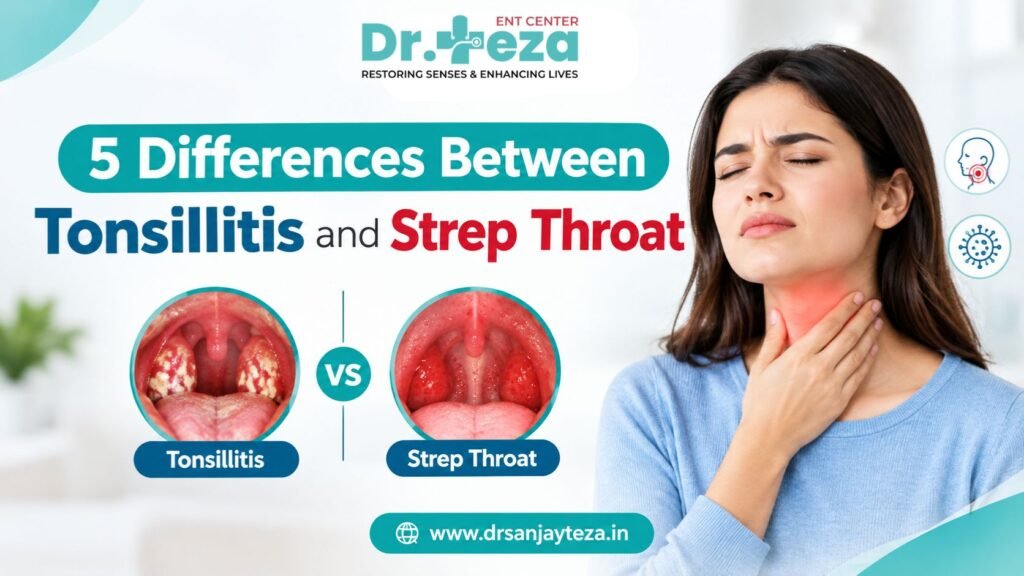
A sore throat, fever, or swollen tonsils can make you wonder what is causing your discomfort. Is it tonsillitis or strep throat? Although both conditions can cause similar symptoms, they are not the same. Understanding tonsillitis vs strep throat can help you recognise the differences and understand when medical attention may be needed.
In this blog, we will explore 5 key differences between tonsillitis and strep throat, including their causes, symptoms, appearance, diagnosis, and treatment. You will also learn how doctors identify these conditions, when antibiotics may be necessary, and which warning signs should not be ignored. By the end, you will have a clearer idea of what to watch for and when to consult an ENT specialist.
What Is the Difference Between Tonsillitis and Strep Throat?
Tonsillitis and strep throat can cause similar symptoms, such as a sore throat, fever, swollen tonsils, and pain while swallowing. However, the main difference between tonsillitis vs strep throat is their meaning and cause. Tonsillitis is inflammation of the tonsils caused by a viral or bacterial infection, while strep throat is a bacterial infection caused by group A Streptococcus bacteria. Understanding this difference can help you know why proper diagnosis and treatment are important.
What Is Tonsillitis?
Tonsillitis occurs when the two small areas of soft tissue at the back of your throat, called tonsils, become inflamed or infected. It is commonly caused by viruses and can also result from bacterial infections. Common symptoms include a sore throat, red and swollen tonsils, fever, painful swallowing, and sometimes white or yellow patches on the tonsils. Treatment depends on the cause of the infection.
What Is Strep Throat?
Strep throat is an infection of the throat caused by group A Streptococcus bacteria. It can cause a sudden sore throat, fever, pain while swallowing, swollen lymph nodes in the neck, and sometimes white patches on the tonsils. Unlike viral throat infections, confirmed strep throat requires appropriate antibiotic treatment prescribed by a healthcare professional.
Can You Have Tonsillitis and Strep Throat at the Same Time?
Yes, you can have both conditions at the same time. Strep throat can cause tonsillitis, but not every case of tonsillitis is caused by strep bacteria. Since their symptoms can overlap, looking at your throat alone may not be enough to identify the cause. A doctor may recommend a rapid strep test or throat culture to confirm the infection when needed.
In the next section, we will explore the 5 key differences between tonsillitis and strep throat, including their causes, symptoms, appearance, diagnosis, and treatment.
5 Differences Between Tonsillitis and Strep Throat
Tonsillitis and strep throat can cause similar symptoms, such as a sore throat, fever, and swollen tonsils. However, they differ in their causes, symptoms, diagnosis, and treatment. Understanding tonsillitis vs strep throat can help you recognise the warning signs and know when to seek medical advice.
1. Causes of Tonsillitis vs Strep Throat
The main difference between tonsillitis and strep throat is what causes them.
Tonsillitis occurs when the tonsils become inflamed due to an infection. It is commonly caused by viruses, but bacteria can also be responsible.
Strep throat is a bacterial infection caused by a type of bacteria called Group A Streptococcus. It affects the throat and can also cause inflammation of the tonsils.
For example, a viral infection that causes cold symptoms may lead to tonsillitis. However, when Group A Streptococcus causes a throat infection, it is known as strep throat.
Key takeaway: Tonsillitis can be caused by viruses or bacteria, while strep throat is specifically caused by Group A Streptococcus bacteria.
2. Symptoms of Tonsillitis vs Strep Throat
Both conditions can cause throat pain, but some symptoms may help doctors identify the likely cause.
Common symptoms of tonsillitis include:
- Sore throat and painful swallowing
- Red and swollen tonsils
- Fever
- Bad breath
- White or yellow patches on the tonsils
- Swollen glands in the neck
Common symptoms of strep throat include:
- Sudden onset of a sore throat
- Fever
- Pain while swallowing
- Swollen and tender glands at the front of the neck
- Red tonsils, sometimes with white patches
- Tiny red spots on the roof of the mouth
A cough, runny nose, or hoarse voice is more suggestive of a viral infection than strep throat.
However, these symptoms can overlap. You cannot confirm strep throat by symptoms alone, so a doctor may recommend a throat swab test.
3. Appearance of the Tonsils and Throat
The appearance of the throat is another important part of the difference between tonsillitis and strep throat.
In tonsillitis, the tonsils may look red, swollen, and irritated. White or yellow patches may also appear, depending on the cause of the infection.
In strep throat, the tonsils and surrounding throat may also appear red and swollen. Some people develop white patches or streaks of pus on the tonsils.
Although these changes may look similar, there is an important point to remember: white spots on the tonsils do not always mean you have strep throat. Viral infections and other conditions can also cause similar changes.
A doctor will consider your symptoms and may recommend testing to identify the cause rather than relying only on the appearance of your throat.
4. Diagnosis: How Doctors Identify the Condition
A doctor may examine your throat, ask about your symptoms, and check for fever or swollen lymph nodes to understand the possible cause of the infection.
Diagnosing tonsillitis
Tonsillitis can often be identified through a physical examination. Depending on your symptoms, the doctor may recommend additional tests to determine whether the infection is viral or bacterial.
Diagnosing strep throat
A rapid strep test or throat culture may be needed to confirm a Group A Streptococcus infection.
- Rapid strep test: A healthcare professional collects a throat swab to check for strep bacteria.
- Throat culture: The sample is checked in a laboratory to see whether the bacteria grow.
For children aged three years and older, a negative rapid antigen test generally needs confirmation with a throat culture. This follow-up is not routinely required for adults.
Testing helps doctors choose the right treatment and avoid unnecessary antibiotics.
5. Treatment and Recovery
Treatment for tonsillitis depends on whether the infection is caused by a virus or bacteria. Strep throat, on the other hand, requires appropriate antibiotic treatment when confirmed.
Tonsillitis treatment
If tonsillitis is caused by a virus, treatment usually focuses on relieving symptoms. Rest, drinking enough fluids, and suitable pain or fever relief may help you feel more comfortable.
If a bacterial infection is responsible, the doctor will decide whether antibiotics are necessary.
Strep throat treatment
Confirmed strep throat is treated with antibiotics prescribed by a qualified healthcare professional. These medicines can shorten the illness, reduce the spread of infection, and lower the risk of certain complications.
Do not take antibiotics without medical advice, as they do not work against viral infections.
How long does recovery take?
Recovery depends on the cause and severity of the infection. Many viral sore throats improve within about a week, while people with strep throat often begin to feel better within a day or two after starting appropriate antibiotics.
If symptoms worsen or do not improve as expected, consult a doctor for further evaluation.
Remember: Tonsillitis and strep throat can share many symptoms, but their causes and treatments are different. If you have severe throat pain, persistent fever, or difficulty swallowing, seek medical advice. Difficulty breathing or being unable to swallow saliva requires urgent medical attention.
When Should You See an ENT Specialist in Varanasi?
You should consult an ENT specialist if you have a persistent sore throat, swollen tonsils, repeated episodes of tonsillitis, or difficulty swallowing. Understanding tonsillitis vs strep throat can help you recognise the possible causes, but symptoms alone cannot always confirm which infection you have. A doctor may examine your throat and recommend a rapid strep test or throat culture if a bacterial infection is suspected.
Symptoms That Need Medical Attention
Consider consulting an ENT doctor if you experience:
- Persistent sore throat: Throat pain that does not improve within a few days or continues to worsen.
- Fever and swollen tonsils: Especially when accompanied by painful swallowing or tender glands in the neck.
- White patches on the tonsils: These can occur with different infections and do not always mean you have strep throat.
- Recurrent tonsillitis: Frequent throat infections that affect eating, sleeping, or daily activities.
- Difficulty swallowing: Pain or difficulty swallowing food and liquids needs medical assessment.
Seek emergency medical care immediately if you have difficulty breathing, cannot swallow saliva, experience drooling, or develop severe throat pain with a muffled voice or difficulty opening your mouth. These symptoms may indicate a serious problem that requires urgent treatment.
Why Consult an ENT Specialist for Tonsillitis or Strep Throat?
An ENT specialist can examine your throat, assess recurring tonsil problems, and help determine whether further testing or treatment is needed. Since tonsillitis may be caused by a virus or bacteria, the right treatment depends on the underlying cause. Antibiotics are not effective against viral infections, while confirmed strep throat requires appropriate antibiotic treatment prescribed by a qualified healthcare professional.
If you are experiencing persistent or recurring throat problems, you can consult Dr. Sanjay Teza, an ENT specialist in Varanasi, for an appropriate evaluation. Early medical advice can help identify the cause of your symptoms and guide suitable treatment.
Why Choose Dr. Sanjay Teza for Tonsillitis and Strep Throat Treatment?
Choosing the right ENT specialist can help you understand the cause of your throat problems and receive suitable treatment. Dr. Sanjay Teza, an experienced ENT specialist in Varanasi, has over 25+ years of experience in ear, nose, and throat care and has treated more than 300,000 patients.
Here is how his experience and approach can help patients with tonsillitis and strep throat:
- Extensive ENT Experience: With years of experience in ENT care, Dr. Sanjay Teza evaluates throat pain, swollen tonsils, difficulty swallowing, and recurring throat infections.
- Accurate Assessment: Tonsillitis and strep throat can cause similar symptoms. A proper clinical examination helps identify possible causes and determine whether further testing, such as a strep throat test, is needed.
- Advanced ENT Facilities: His ENT centre is equipped with modern facilities, including modular operating theatres and a Carl Zeiss microscope, supporting specialised ENT procedures when required.
- Personalised Treatment Guidance: Treatment depends on the cause of the infection. Viral tonsillitis generally requires supportive care, while confirmed strep throat may require prescribed antibiotics.
- Qualified Medical Background: An alumnus of Banaras Hindu University (BHU), Dr. Teza completed his MBBS and postgraduate training in ENT and further developed his skills during senior residency at Batra Hospital, Delhi.
If you experience persistent throat pain, recurrent tonsillitis, fever, or difficulty swallowing, consult a qualified ENT specialist for proper evaluation. For patients seeking an ENT specialist in Varanasi, Dr. Sanjay Teza can assess their symptoms and guide them towards appropriate care.
Also Read: https://drsanjayteza.in/voice-swallowing-problems-when-to-see-an-ent-doctor/
Conclusion
Understanding tonsillitis vs strep throat can help you recognise the possible cause of a sore throat and know when to seek medical advice. Tonsillitis is inflammation of the tonsils caused by viruses or bacteria, while strep throat is a bacterial infection caused by group A Streptococcus. Both conditions can cause fever, throat pain, swollen tonsils, and difficulty swallowing.
However, symptoms alone may not be enough to confirm the cause, and a strep throat test may be necessary.
Treatment depends on the infection, with antibiotics used when medically indicated for bacterial infections such as confirmed strep throat.
If you experience persistent throat pain, recurrent tonsillitis, or worsening symptoms, consult a qualified ENT specialist.
For appropriate throat care in Varanasi, Dr. Sanjay Teza can assess your symptoms and guide you towards suitable treatment.
1. What is the main difference between tonsillitis and strep throat?
Tonsillitis is inflammation of the tonsils caused by viruses or bacteria. Strep throat is a bacterial infection caused by group A Streptococcus. Strep throat can also cause tonsillitis, so both conditions may occur together.
2. How can I tell if I have tonsillitis or strep throat?
Both conditions can cause a sore throat, fever, swollen tonsils, and painful swallowing. Cough and a runny nose are more common with viral infections, while sudden throat pain and fever may suggest strep. A medical examination and appropriate testing can help confirm the cause.
3. Can tonsillitis cause white spots on the tonsils?
Yes, tonsillitis can cause white or yellow patches on the tonsils. These patches may also occur with strep throat and other infections. Their appearance alone cannot confirm a bacterial infection, so medical assessment may be needed.
4. Does tonsillitis always require antibiotics?
No, antibiotics are not needed for viral tonsillitis because they do not work against viruses. Antibiotics may be prescribed for certain bacterial infections, including confirmed strep throat. Always follow a qualified healthcare professional’s advice.
5. How is strep throat diagnosed?
A doctor examines your throat, checks your symptoms, and may recommend a rapid strep test or throat culture. These tests help identify group A Streptococcus bacteria. The need for follow-up testing depends on factors such as age and the initial test result.
6. How long does strep throat last after starting antibiotics?
Many people begin to feel better within 24–48 hours of starting appropriate antibiotics for strep throat. Recovery varies from person to person. If symptoms do not improve after 48 hours, contact your healthcare professional.
7. Is strep throat more serious than tonsillitis?
Neither condition is always more serious; the severity depends on the cause and symptoms. Untreated strep throat can sometimes lead to complications, while severe tonsillitis may cause dehydration or a tonsillar abscess. Seek medical attention for severe or worsening symptoms.
8. When should I see an ENT specialist for tonsillitis?
Consult an ENT specialist if you have persistent or recurrent tonsillitis, worsening throat pain, or difficulty swallowing. A specialist can assess your symptoms and recommend suitable treatment. Seek emergency care if you have difficulty breathing or cannot swallow saliva.